Ephesus and 'Neokoros'
In the Roman Empire, ‘Neokoros’ (lit. “temple-sweeper”) was an honorific title granted to cities in the Eastern provinces for constructing a temple dedicated to the imperial/local cult of province-wide importance.
Historical Writeup/Research/Essay
In the Roman Empire, ‘Neokoros’ (lit. “temple-sweeper”) was an honorific title granted to cities in the Eastern provinces for constructing a temple dedicated to the imperial/local cult of province-wide importance. It was given by the senate, with the approval of the koinon (provincial body) and emperor, and such recognition was sought as a symbol of prestige. Ephesus, perhaps the most significant city of its region, was granted the title four times. Here, I aim to explore why Ephesus received the title for each of these instances, and reach conclusions about implications for our understanding of both Ephesus and neokoros as a whole.
First Neokoros
Ephesus’ first neokoros is celebrated on the following coin issued under Nero, datable (with the reference to proconsul Marcus Acilius Aviola) to 65/66 AD.
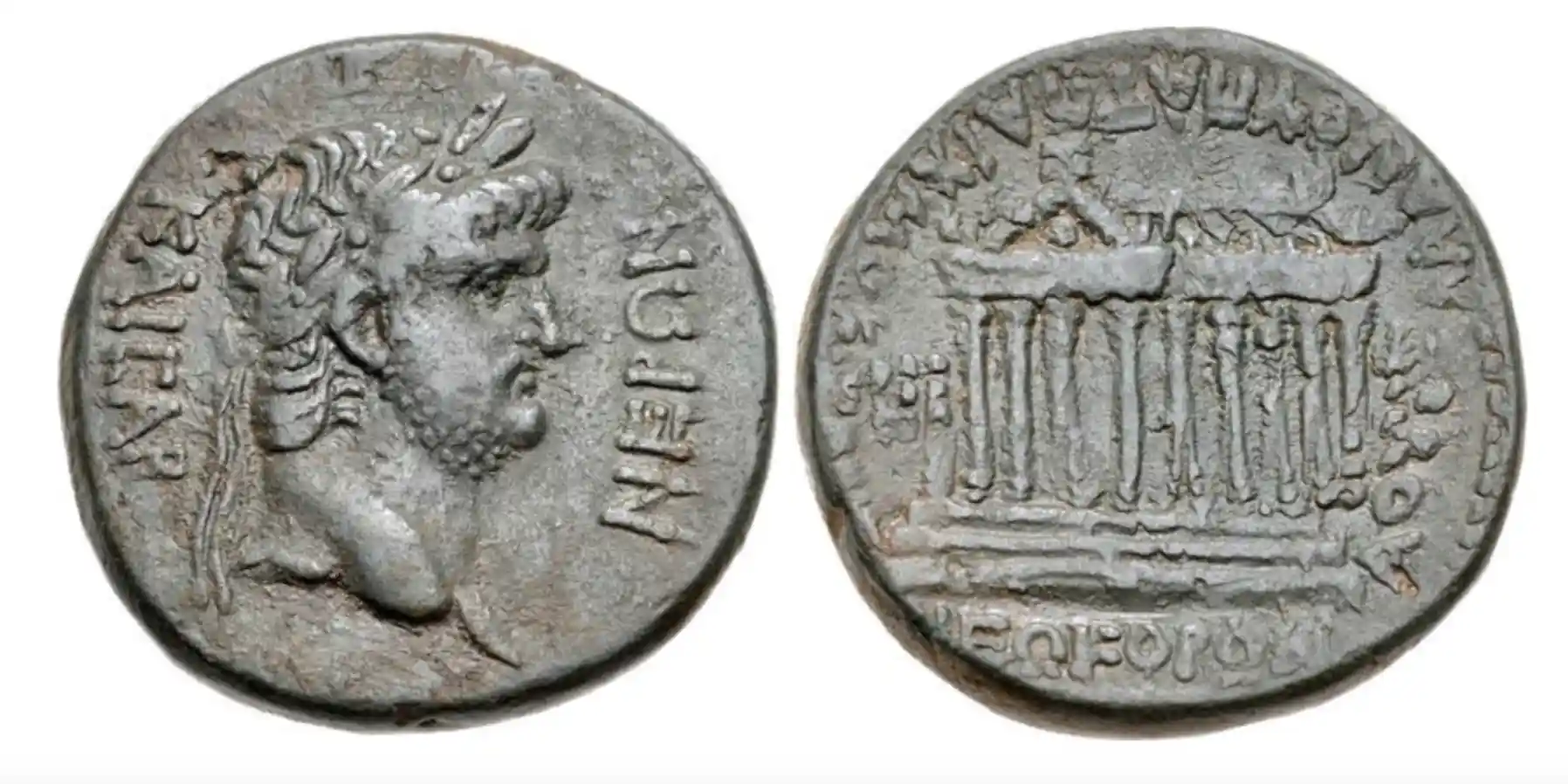 IONIA, Ephesus. Nero. AD 54-68. Æ (27mm, 11.74 g, 1h). Marcus Acilius Aviola, proconsul; Aechmocles, magistrate. Struck AD 65-66. Laureate head right / Three-quarter view of temple. RPC 2626; SNG München -; SNG von Aulock 7863; SNG Copenhagen -; BMC -; Waddington 1620.
Perhaps this neokoros was granted for dedicating a temple to Nero — there is evidence to suggest that Ephesus was keen to honour the imperial cult. Since Ephesus had been denied the honour to devote a temple to Tiberius decades earlier, it is indeed possible that the city “was calling itself neokoros for a provincial temple that it had been seeking since [then] and which it may have finally won in the reign of Nero.” There are also details on the coin’s reverse that suggest imperial connections. The star surmounting the temple’s pediment (difficult to see on this example) is “particularly associated with Divus Julius.” Similarities have been noted with the “common temple of Asia of the Augusti,” held in Ephesus, dedicated to Domitian decades later (for which more evidence survives). If this is the same building depicted on a coin of Nero, we have to explain lengthy delays in construction. This is not difficult; the empire underwent much civil strife in the late first century.
Such arguments, however, have been challenged in recent years. Some have reinterpreted this first neokoros as an acknowledgement of Ephesus’ position as keeper of a temple dedicated to Artemis (rather than the imperial cult). The temple depicted, while possessing imperial attributes, seems to echo the temple of Artemis in Ephesus, a traditional wonder of the ancient world and a landmark to commemorate on coinage. Undeniably, the cult of Artemis was very strong at the time. St Paul’s Christian preachings were met with an episode of riot out of reverence for the goddess. Consequently, historians are left with two starkly different interpretations as to why Ephesus was granted its first neokoros (i.e. for Nero or for Artemis), both supported by contemporary evidence but neither wholly compelling. Finally, it is worth noting that contemporary inscriptions are unhelpful in their ambiguity, and only serve to complicate the matter further.
Second Neokoros
Hadrian had granted Ephesus’ second neokoros by 132 AD. It is reasonable to suppose that the Emperor granted this privilege because he grew fond of the city: Hadrian, who spent over half of his reign travelling outside the home province of Italia visited Ephesus at least twice. There, he is even referred to as “founder” by citizens before giving this neokoros. Hadrian was also notoriously generous in his handing out of neokoroi: during his reign “three separate provincial cults” were established in the province of Asia, when this might have previously been reserved for just one city.
It would be remiss, however, to neglect the apparent role of Ephesus itself in actively persuading Hadrian to grant them this neokoros. Local rivals Smyrna and Pergamon had already been given the title twice, a humiliating prospect for a once highly influential seaport and centre of trade of the Maeander river valley. A statue base honours Tiberius Claudius Piso Diophantos for asking the emperor to give Ephesus neokoros again, a suggestion of civic pride from which we might infer the city greatly desired this honour, and attained it by whatever means possible. Extensive coinage also commemorates Ephesus’ second neokoros, supporting the interpretation that the city was desperate for the honour.
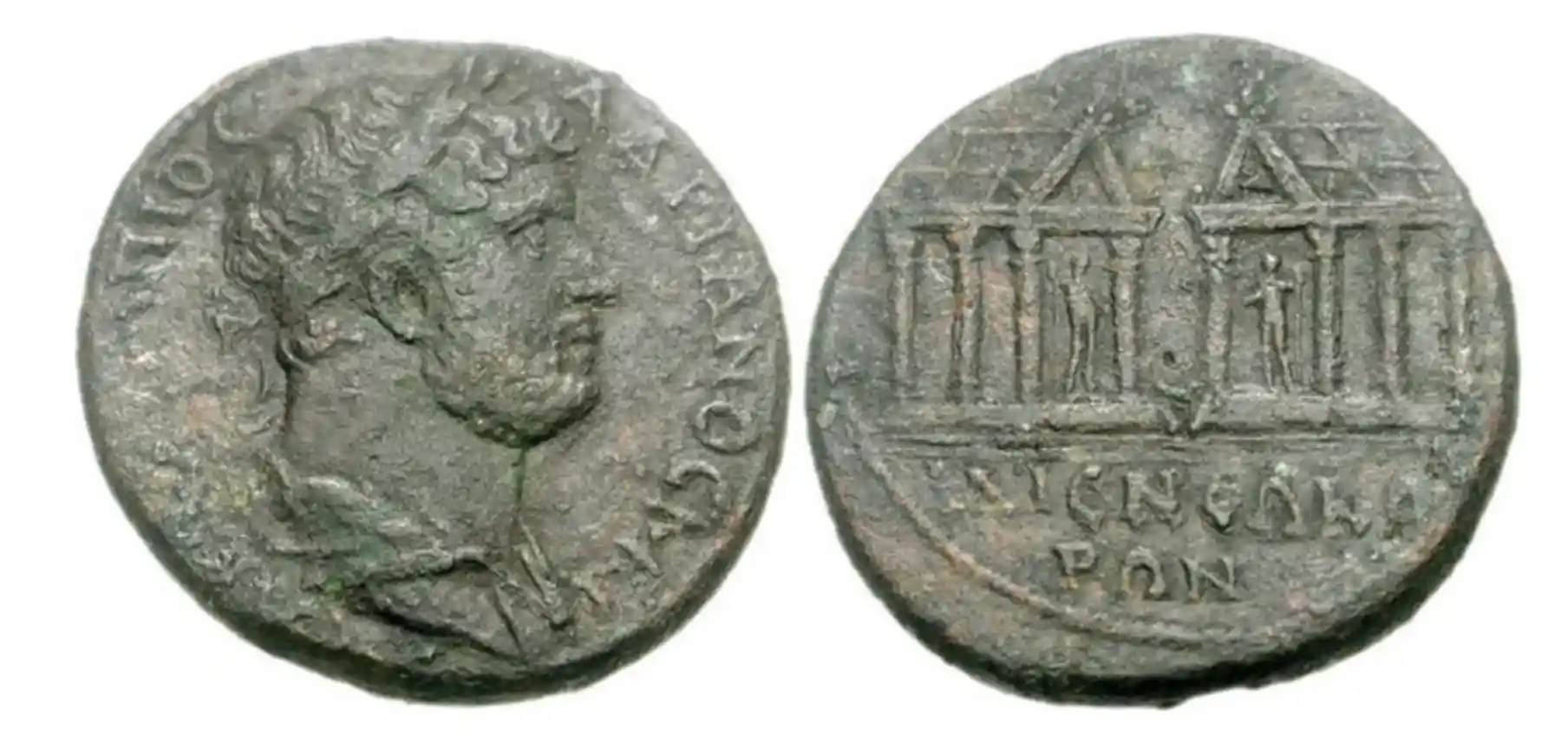 IONIA, Ephesus. Hadrian. AD 117-138. Æ 32mm (24.87 g, 6h). Laureate and draped bust right / Two temples, each containing standing male figure holding scepter, viewed in perspective, vis-à-vis; Π and Δ in pediments. Cf. Kraft pl. 94, 12 (for obv. type); cf. Mionnet III 272 (for rev. type).
Prominent on the lower reverse field is the legend “twice neokoros” ([Ἐφεσίων] δίς νεωκόρων), and two identical temples are featured as a reference to the number of times neokoros was granted. Given that the male figure within each has traditionally been taken to represent the emperor, such issues cement an association between such places of worship and the imperial cult. Perhaps, therefore, this second neokoros was also an attempt to establish stronger connections with Hadrian and the imperial family. Later issues, under emperors like Antoninus Pius, emphatically echo this earlier type, although a cult-statue of Artemis soon reappears — maybe the above issue was excessively imperial, a development we will see echoed in the factors affecting Ephesus’ third neokoros.
Third Neokoros
To understand the factors affecting Ephesus’ third neokoros, we need to reconstruct the sequence of events that led to her reception of the title, involving the rival brother emperors Geta and Caracalla. The most likely scenario is that Ephesus asked the two to “build temples” where “both agreed, but on separate temples.” Geta seems to have decided to dedicate a building to the imperial cult, as was customary, but Caracalla suggested instead that the Ephesians “enjoy the honour not from [him], but out of regard for the goddess.” Such a display of modesty, whether born from fraternal rivalry or as a form of propaganda, must have been remarkable news to citizens used to the arrogance of the late second and early third centuries’ increasingly military rulers.
The following coin is from a period of joint rule between Geta and Caracalla, and suggests that while Ephesus had the two aforementioned honours at one point, this did not last for long.
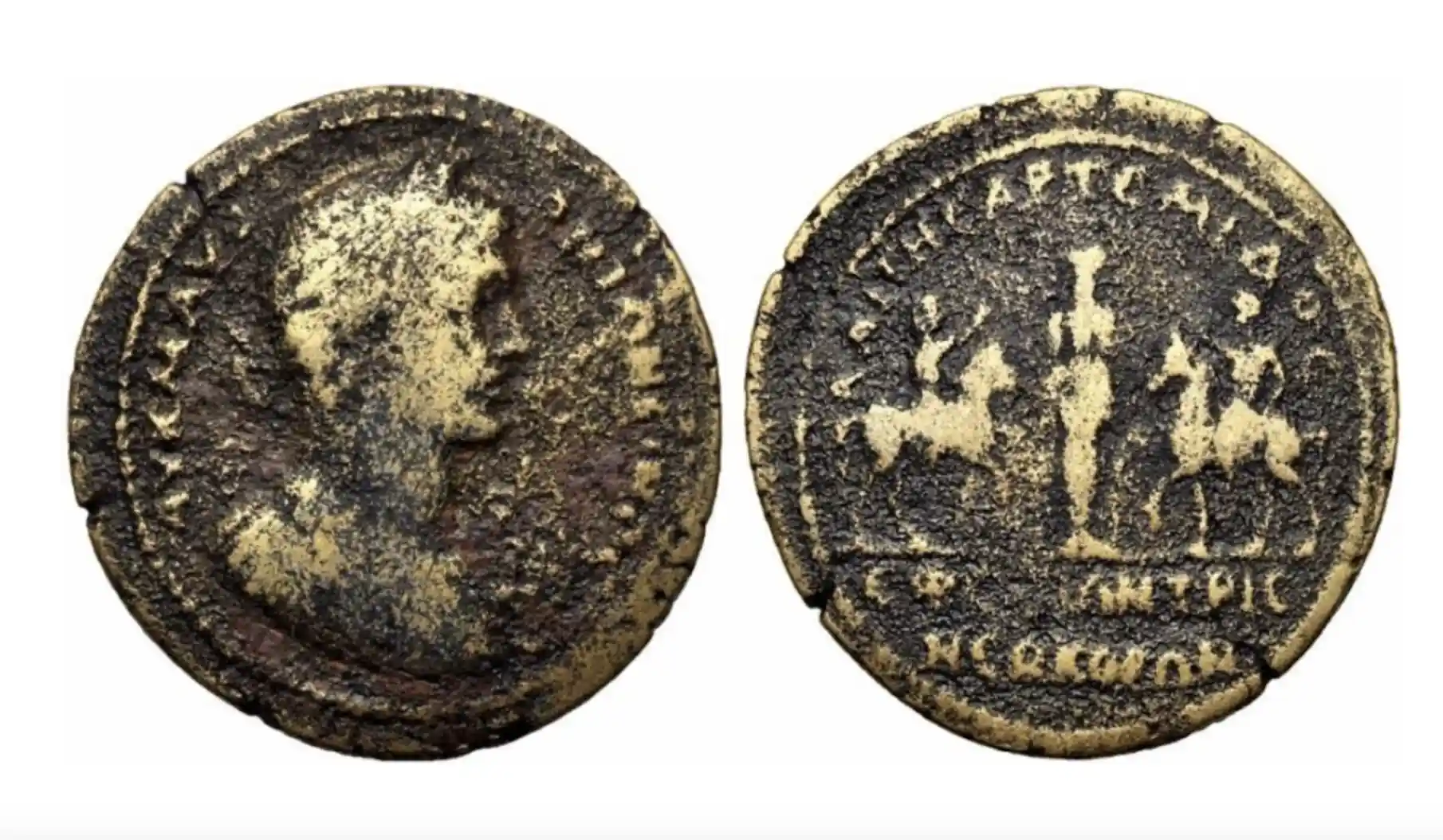 Ionia - Caracalla (198-217), Ephesus, AE, g 22,83, mm 37, Laureate, draped and cuirassed bust r., Cult-statue of Artemis flanked by Caracalla and Geta on horseback. SNG von Aulock 7871.
The reverse legend reads “thrice neokoros and of Artemis:” since “thrice neokoros, twice of the Augusti and once of Artemis” appears on later inscriptions, with one fewer title, Caracalla must have removed Geta’s neokoros after he was assassinated by the Praetorian guard in 211 AD. Ephesus’ third neokoros was therefore received because 1) she requested it and 2) Caracalla was keen to oblige, devoting the honour to a goddess instead out of feigned respect and humility.
Fourth Neokoros
It is nearly unsurprising that Ephesus received its fourth neokoros under Elagabalus, even if it elevated the city to a record number of titles that would never be beaten. This emperor, who approved the honour, gave four cities in Asia such titles. Despite this, there exists no recorded journey of Elagabalus to Ephesus. By this point, therefore, neokoros was becoming increasingly devalued, and would seem not to command the respect it did centuries earlier. Even so, Ephesus remained proud to commemorate their title, especially because it put them ahead of all other cities as “foremost in Asia.”
The following coin, for example, was minted under Elagabalus, and supports Ephesus’ retained civic pride in neokoroi.
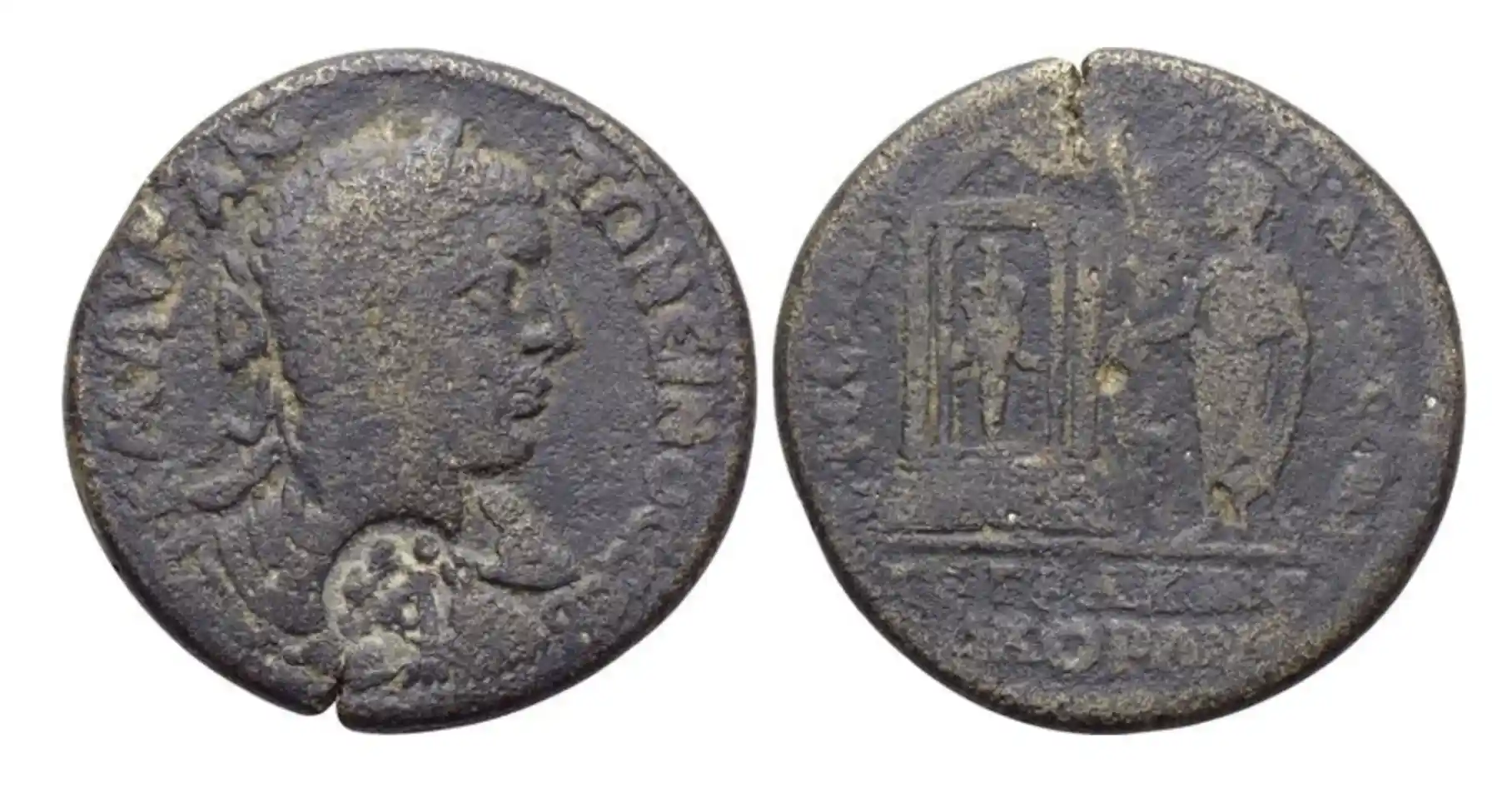 IONIA. Ephesus. Elagabalus (218-222). Ae. Obv: A K M AVP ANTΩNЄINOC CЄB. Laureate, draped and cuirassed bust right; on neck, uncertain mark in circular countermark on neck. Rev: ЄΦЄCIΩN MONΩN AΠACΩN / TЄTPAKI NЄΩKOPΩN. Tetrastyle temple, containing facing statue of the Ephesian Artemis; to right, Elagabalus standing left, sacrificing over tripod to left. Mionnet 380; Künker 97, lot 1693 (same dies).
The presence of Elagabalus on the reverse suggests a “sending honours to Artemis at a distance.” As further acknowledgements of gratitude towards the emperor, he is depicted as tall as the temple (symbolic, in art, of quasi-divine status) and performing a sacrifice (a physical manifestation of piety). Such praise does indeed emphasise how much the honour meant to Ephesus, but unfortunately her faith in Elagabalus was ill-founded: the emperor ruled for just four years, after which he and all associated cults were to be forgotten. The title was consequently soon retracted (i.e. Ephesus became ‘thrice neokoros’ once more) and the mention of ‘neokoros’, now a humiliating reminder, slowly faded from coinage.
Under Gallienus and his father Valerian (between 255 and 258 AD), however, Ephesus was once again restored to four neokoroi. This instance was likely an effort on the emperor’s part to right an earlier wrong, and gain more support with the city. It is curious, and revealing, that later coin types “do not reflect any special jubilation” but rather “continue to concentrate on [...] the city’s patron Artemis.” By this point, with the cessation of coinage, a rapidly declining Roman empire, and the pillaging of Ephesus in 263/4 AD, neokoros lost its significance and wasn’t meaningfully spoken of ever again.
Conclusions
While there are ongoing academic debates as to the circumstances and details of Ephesus’ first neokoros, it is possible to construct convincing theories as to why the city received each of her other three neokoroi. Here, I have suggested that for the most part the granting of this title was a factor of both the city’s will and the emperor’s aims. For Ephesus, neokoros was a brag-worthy recognition of the city’s significance, especially in the context of rival cities in the province of Asia, and therefore a source of civic pride. For the emperor, granting neokoros facilitated closer connections with the East (which they subjugated, but allowed to maintain distinct identities through customs), ensuring a city’s respect by demonstrating favour. Such honours could form part of imperial propaganda, as exemplified by Caracalla. Most notably, we have learnt that in Ephesus the system of neokoroi effectively integrated both the worship of Artemis (first/third neokoros) and the imperial cult (second/fourth neokoros).
Select Bibliography
Brinks C. / “Great Is Artemis of the Ephesians”: Acts 19:23-41 in Light of Goddess Worship in Ephesus (2009)
Burrell B. / Chapter 4 of Neokoroi: Greek cities and Roman emperors (2003)
Christopher H / Coinage and Identity in the Roman Provinces (2005)
Friesen S / Twice Neokoros (1993)
Kevin B / Roman Provincial Coins: An Introduction To The Greek Imperials (1988)
Notes
Photo & description credit, respectively: CNG, CNG, Bertolami Fine Arts, Numismatik Naumann.
To see footnotes hyperlinked, click here.