An Unpublished Palaiologan Tornese
The study and attribution of an unpublished Late Byzantine Tornese
Attribution Research
In most numismatic niches, unpublished types range from uncommon to virtually nonexistent in well-studied fields. Coins from the Late Byzantine Period are quite the exception. Thanks to modern auction sites like biddr being so accessible, and hundreds if not thousands of Byzantine coins coming up every single week, on top of the accessibility of major reference works such as "Catalogue of the Byzantine Coins in the Dumbarton Oaks Collection," thanks to the internet, hobbyists are now identifying unpublished types almost weekly it seems.
A couple of months ago, at a biddr auction, I identified a coin I thought to be a rare but not unseen DOC 1197 (Published there as John V but is most likely Andronikos II). The auction house had identified the coin as "Latin Rule, Billon Aspron Trachy Nomisma. Constantinople, AD 1204-1261." From this absurd attribution, it was clear the auction house had no idea how to identify it, as is common with many Late Byzantine types. A few other bidders seemed to be interested in this curiosity, although many more were probably deterred by the attribution. I won the coin for a cool 200 euros.
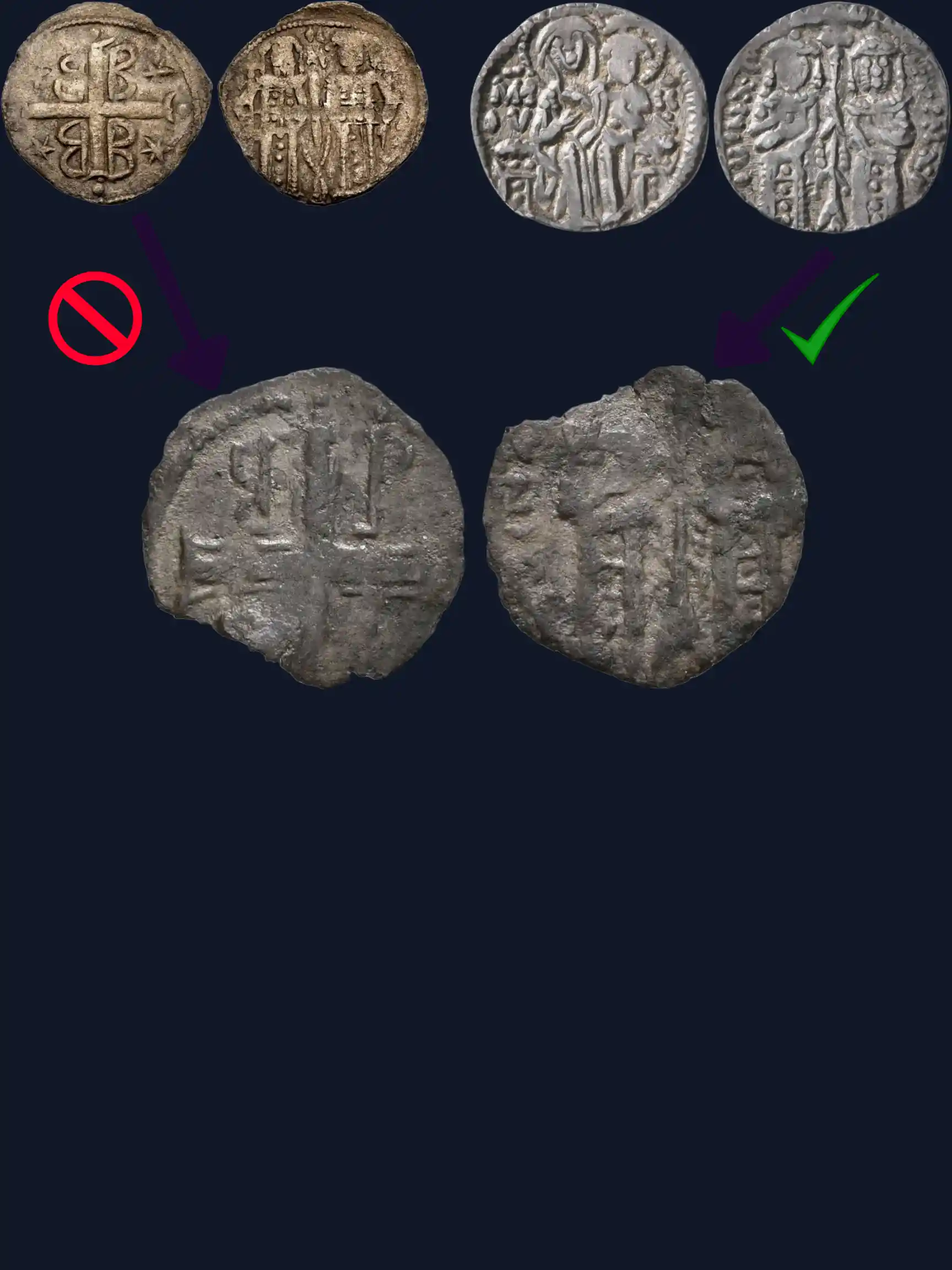
Upon receiving the coin in hand, and observing closer, I noticed some major things were off, the most notable being that the style of the cross on the obverse was completely wrong, and it was missing the stars that DOC 1197 has in four corners. On the reverse side, the Loros panels were wrong, the legend was in a different orientation, and the emperors weren't holding anything in their left and right hands.
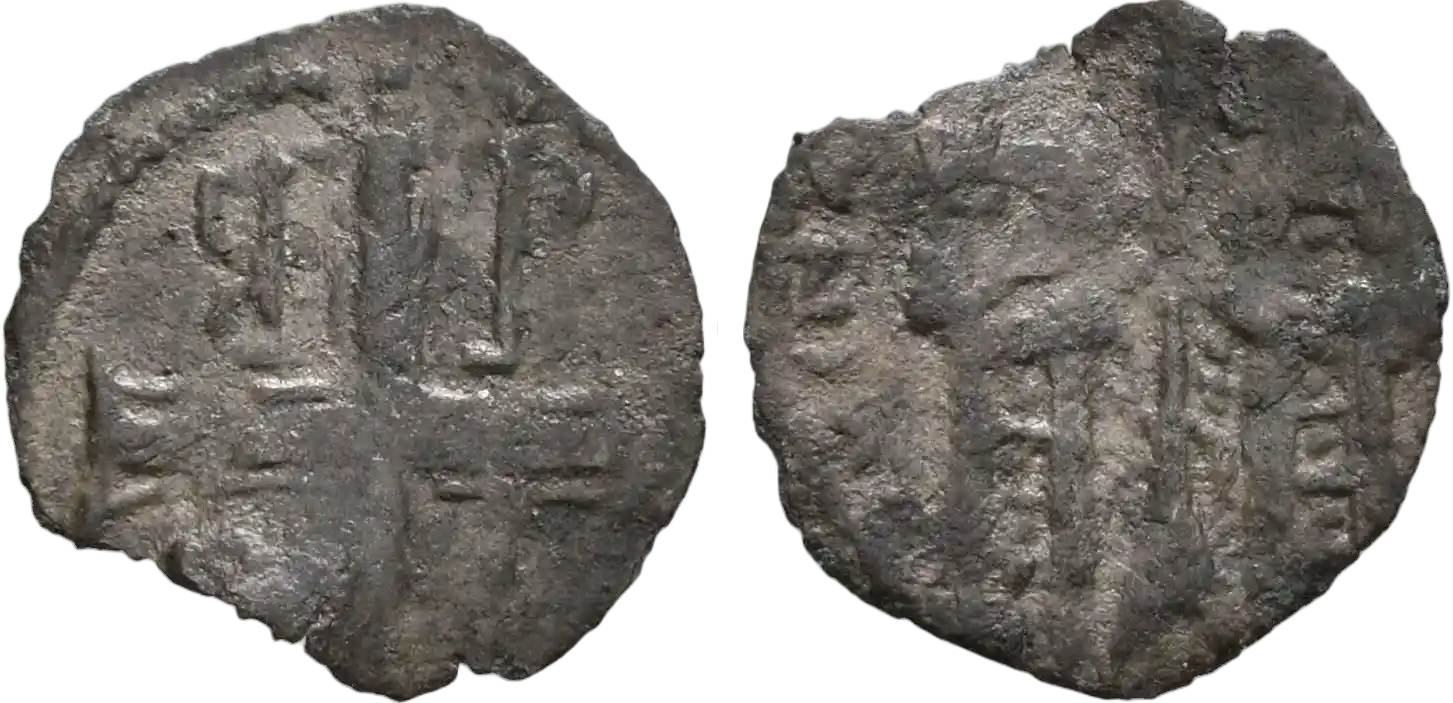
My Type Above, Unpublished (?), Obverse: B's in four corners, cross between/ Emperors stand facing, holding cross or labarum on triangular base between them; fragmented legend left. 0.35g 14.55mm
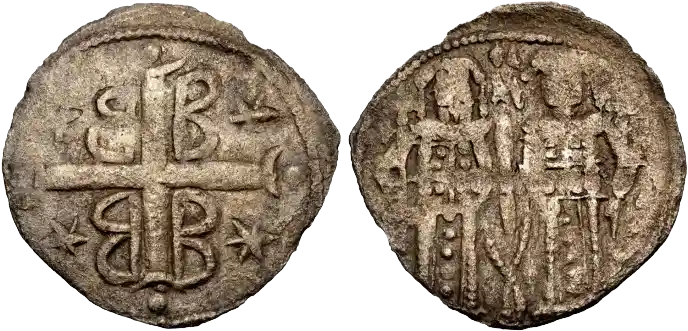 DOC 1197 Above, Obverse: Long cross, with four B's and four stars in quarters / Three-quarter-length figures of the two emperors standing facing, to left, holding scepter, to right, holding labarum or akakia between them.
The obverse then, is seemingly unique, however the reverse is not. It very closely, if not exactly, matches DOC 1195, a Basilikon.
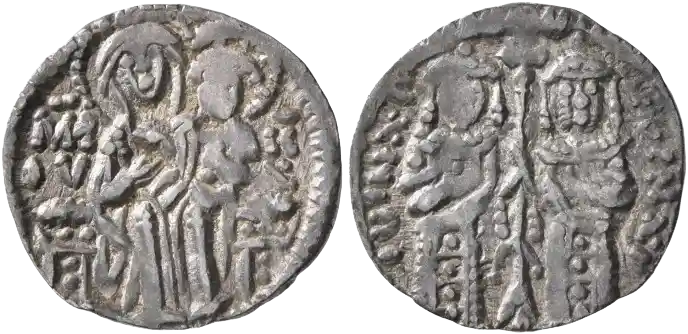 DOC 1195 Above, The Virgin enthroned facing, nimbate, wearing pallium and maphorium, holding on her left rm the infant Christ, nimbate/ John V, on the left, standing facing, wearing loros, placing his right hand on his chest, and John VI, on the right, standing facing, wearing loros, placing his left hand on his chest, holding long cross between them.
Due to these similarities, the coin I acquired can be identified as belonging to the joint reign of John V Palaiologos and John VI Kantakouzenos from 1347 - 1353 AD. The obverse, though matching closest to a most likely earlier type, is still completely different, and the reverse confirms its attribution here.