The T. Carisius Denarius and the Minting Process
Coin Breakdown Episode 1 - The ancient coin tied to the origin of coinage
Write-Up
The protagonist of this first episode of my 'Coin Breakdown' series is the following denarius of T. Carisius, and by the end of this article you will know everything about it and what makes it so interesting!
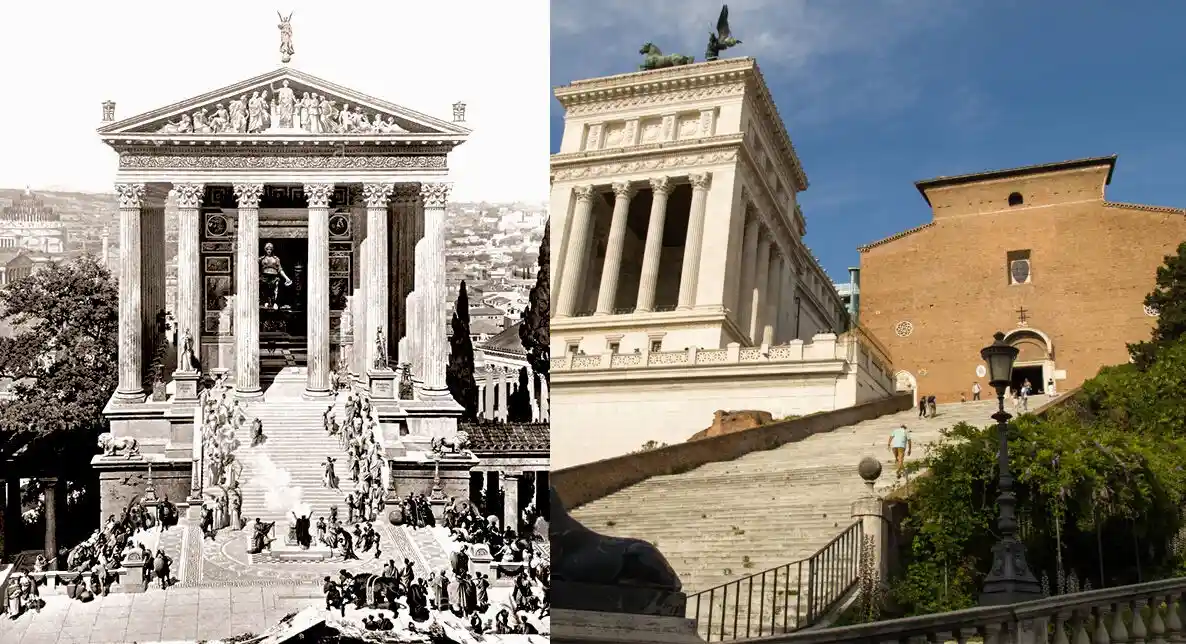
 The word for money comes from the Latin word moneta, which originated from the temple of the Roman goddess Juno Moneta. Why, would you ask? Because in Republican times (509-27 BCE) the mint was next to this temple, and by association 'moneta' started being used to denote first the mint, and then the coins themselves. Below you can see a reconstruction of the temple, where now the Basilica di Santa Maria in Aracoeli is located, next to the 'Vittoriano' in Rome.
 But why was the goddess Juno called 'moneta'? Well, moneta comes from the latin verb monēre (to warn, to admonish), and it originated from a legendary episode dating back to 390 BCE, when the Senones Gauls, under the command of Brennus, had Rome under siege. According to tradition, the Gauls tried to launch a surprise attack at night, but it failed when the sacred geese of Juno began loudly honking and alerted the Romans.
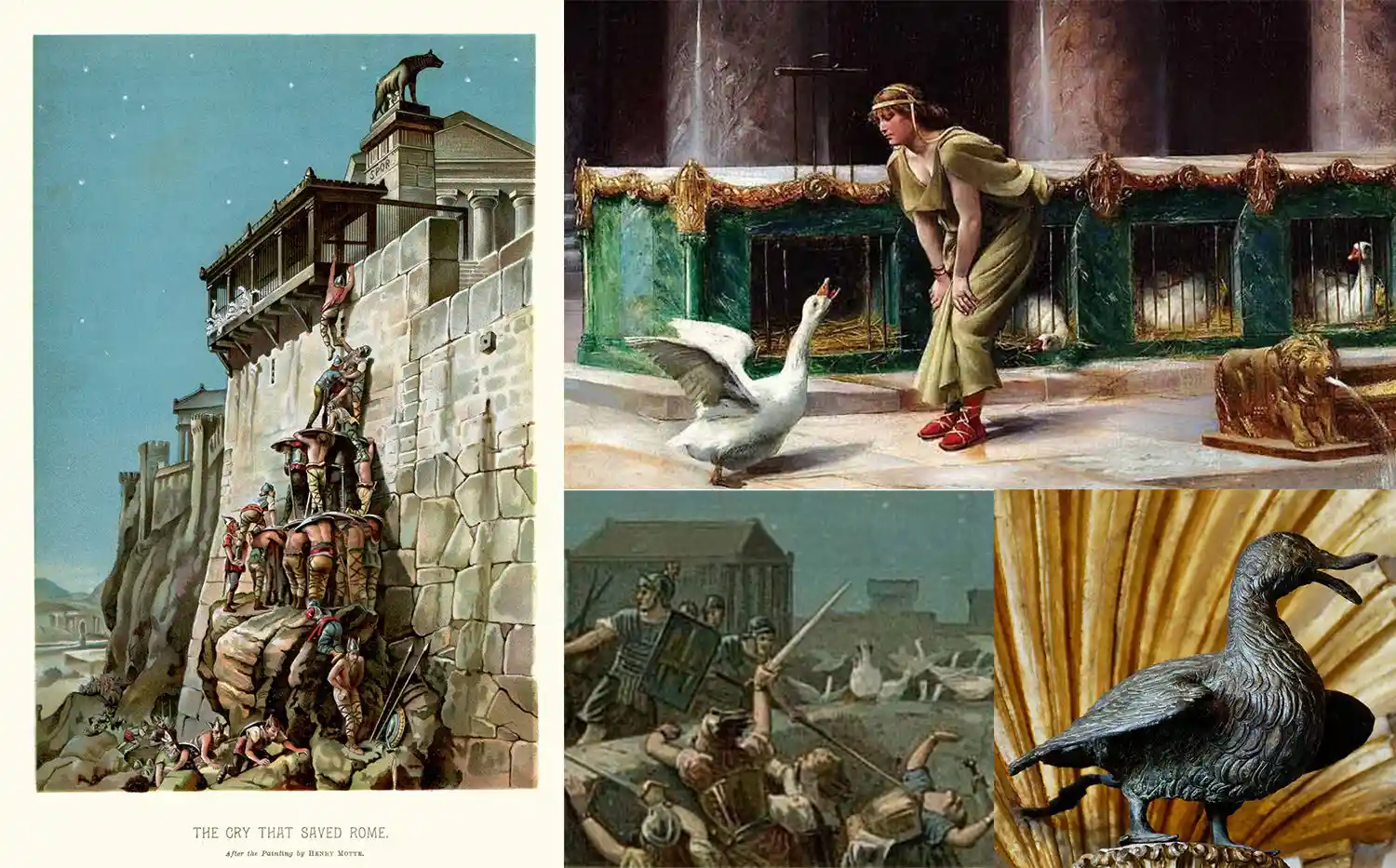 While there was probably no temple on the hill at that time, there was likely a sanctuary with an altar and a pond where her geese were kept. Now, let's see what's on both sides of the coin:
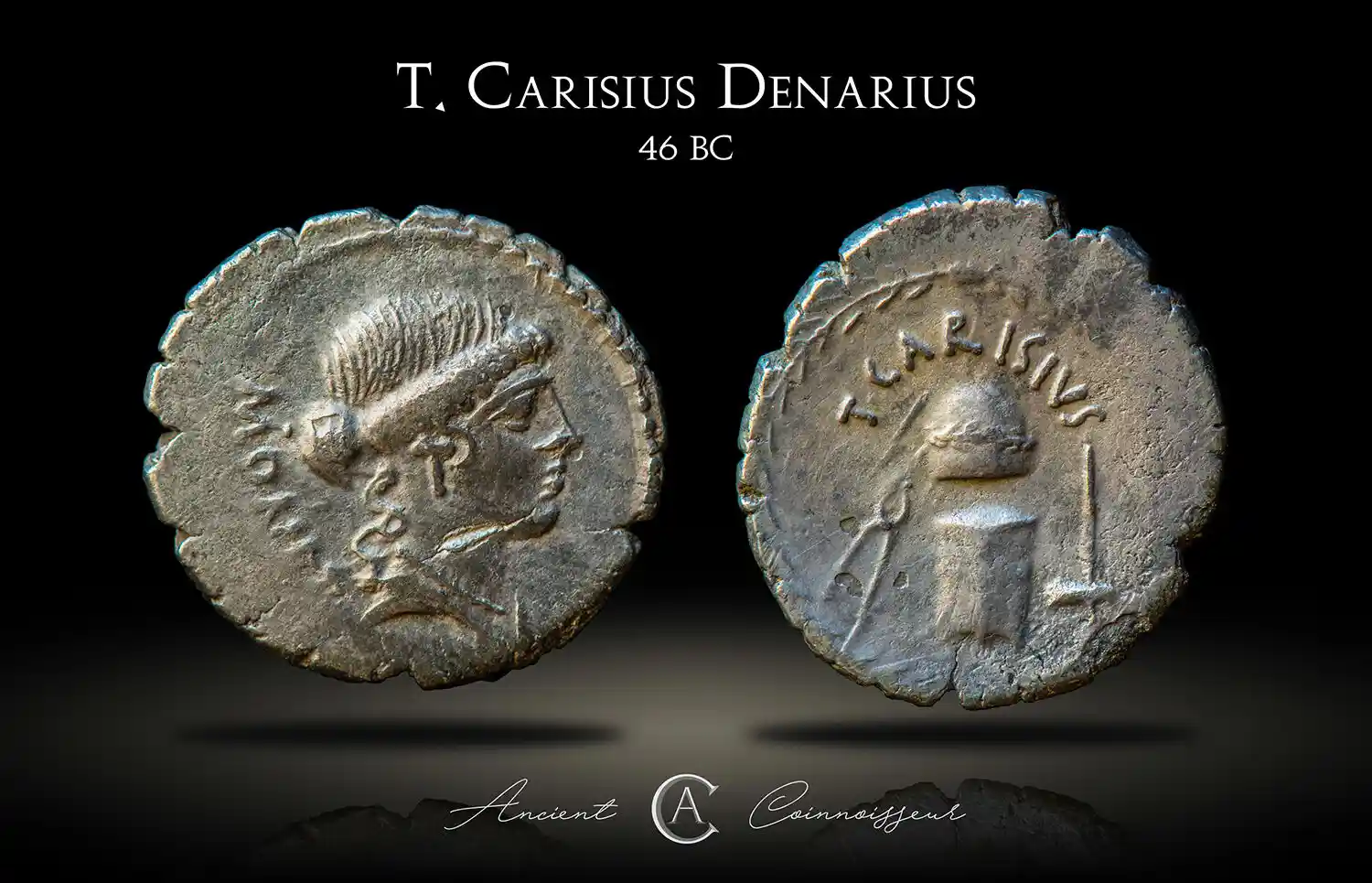
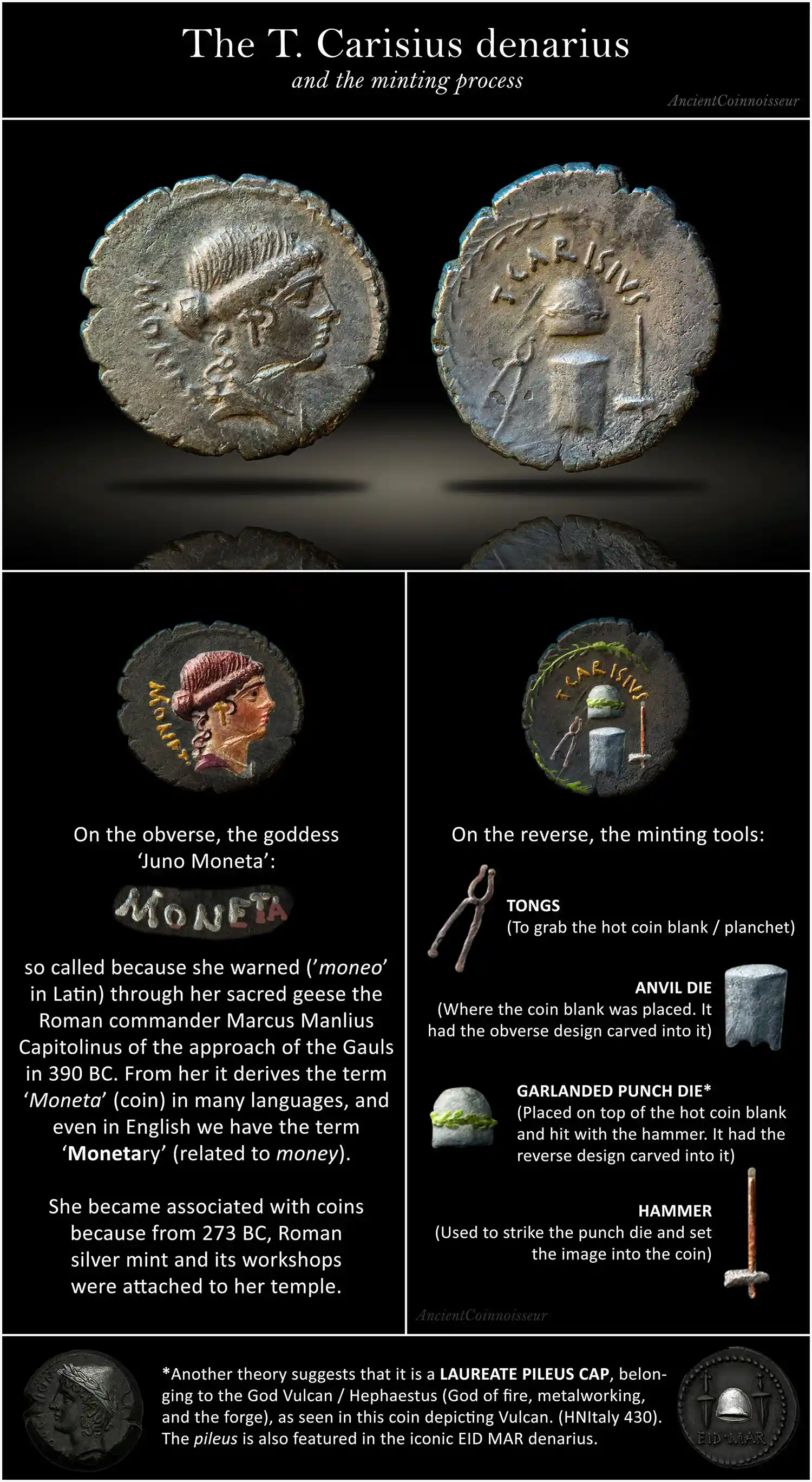
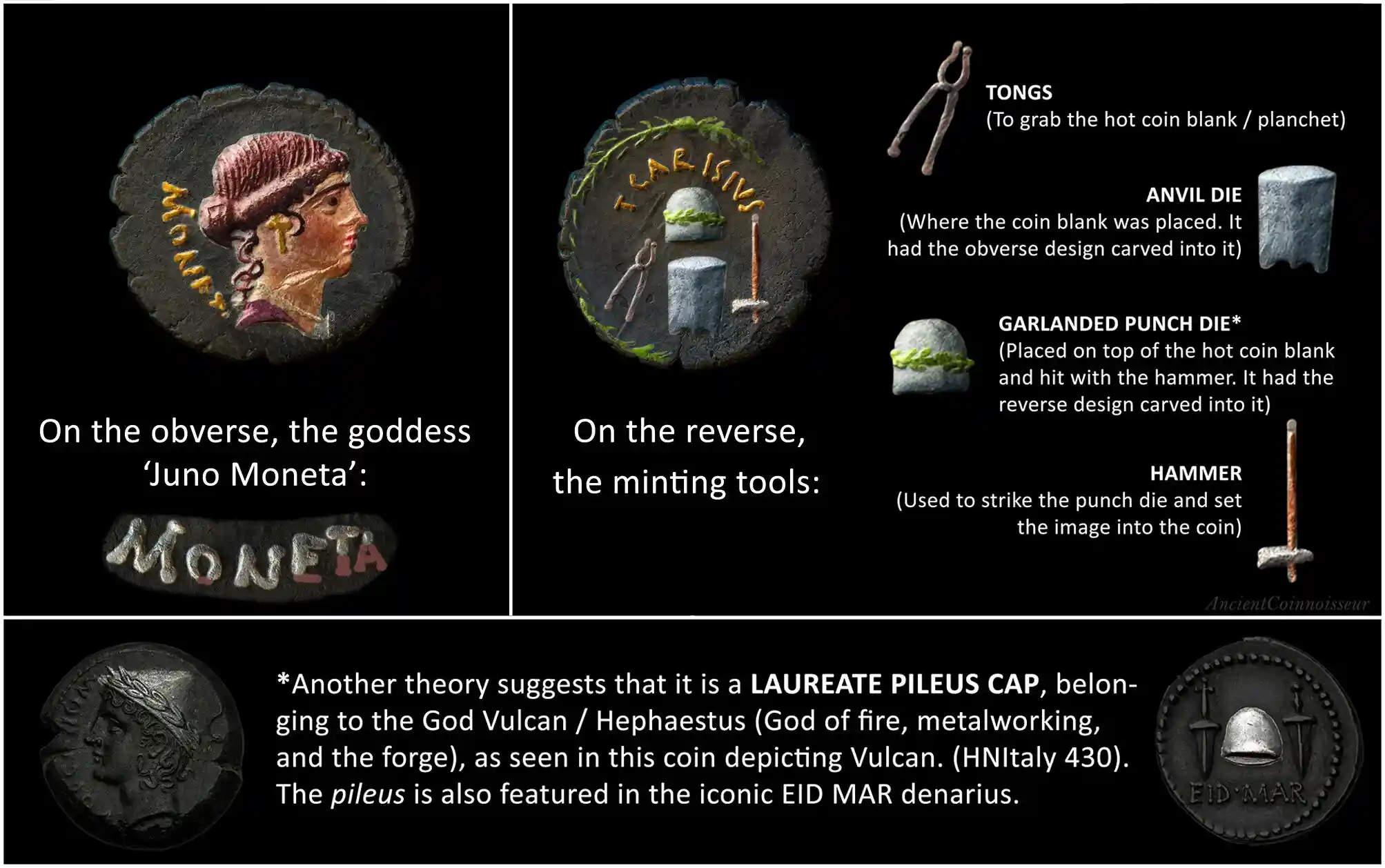 As we can see, this coin is a 'meta-coin' for two reasons: first, it shows Juno Moneta, with 'moneta' written on the obverse, making it a direct reference to itself. Then, on the reverse, it shows the minting tools used to create ancient coins. Another theory is that these are not the actual tools used in the minting process, but rather, the ones used by Vulcan / Hephaestus. Regardless, this type is a very interesting one numismatically and quite sought after, with prices often high for well struck specimens. Ironically, this coin dedicated to the minting process was often poorly struck!
Here my coin on Numisvault:
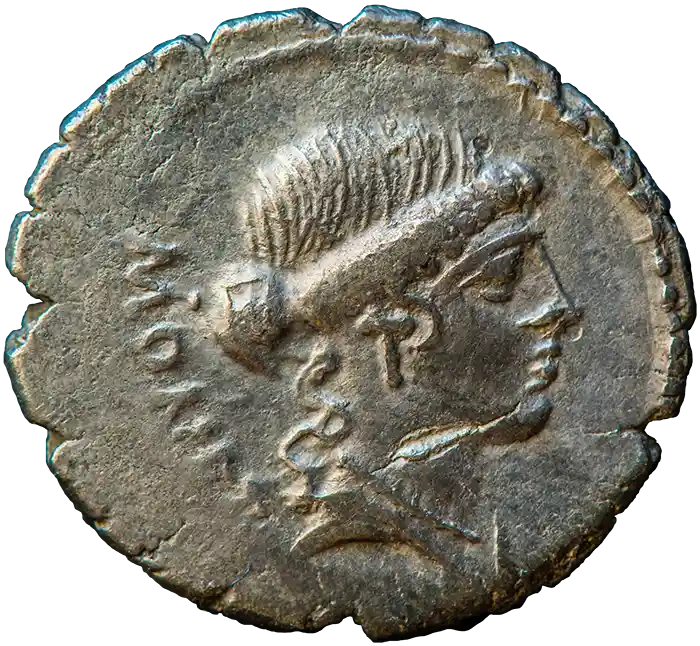
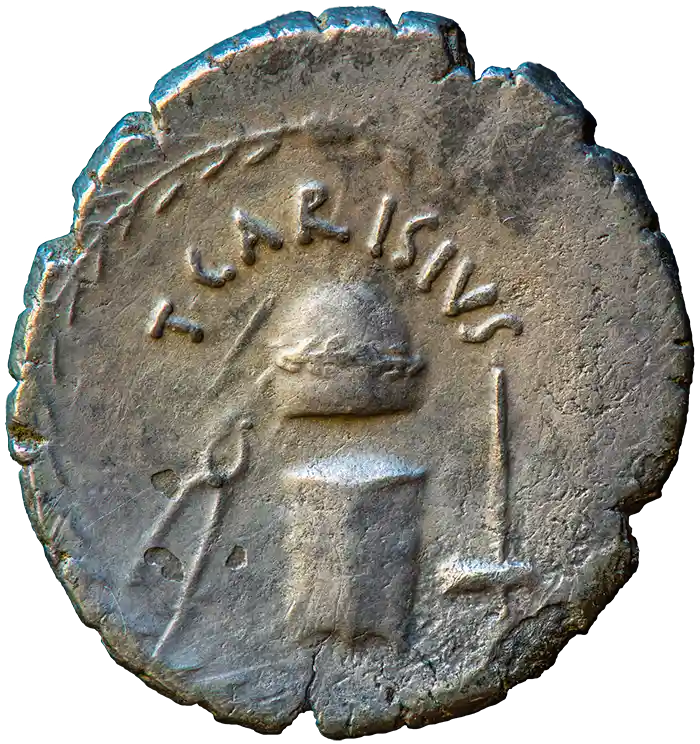
And here the entire infographic in compact form!
 See you for the next episode!