The Rise of Octavian
“I give back the Republic to the Senate!” This is what Octavian proclaimed in January 27 BCE, as he stood before a pacified Rome.
Historical Writeup/Research/Essay
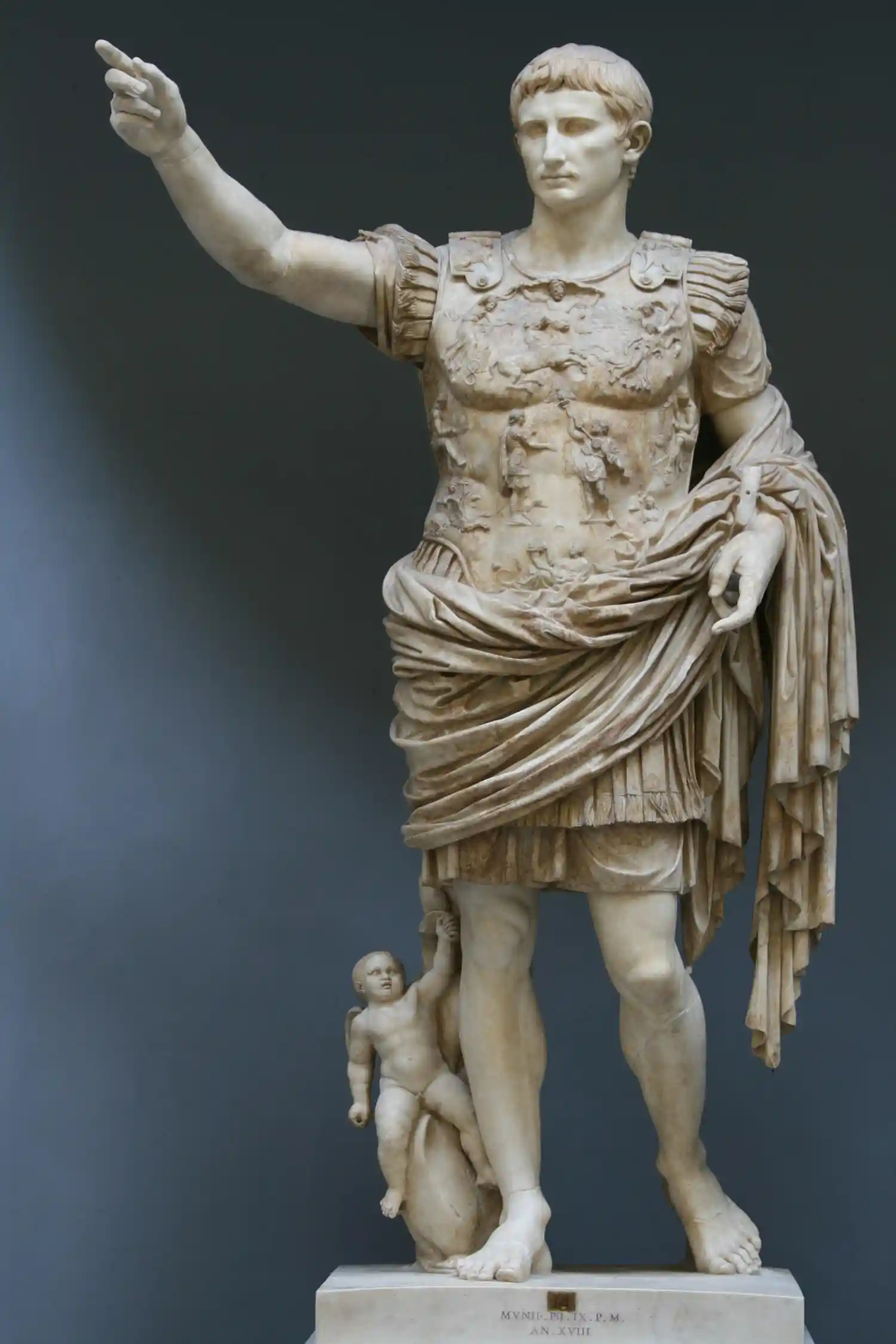 ---- Statue of Augustus of Prima Porta; c. 1st century AD; Source: World History Encyclopedia ----
“I give back the Republic to the Senate!”
This is what Octavian proclaimed in January of 27 BCE, as he stood before a pacified Rome, with the assured control and composure which would later become his trademark. It was not the first time that Octavian had tried to pass off these exceptional circumstances as business as usual, and it certainly wouldn’t be the last.
The Republic had died: murdered in the violent outpour of blood resulting from the power struggles of the elite. In its place, stood one man and his new empire. That man was Gaius Octavius (referred to as Octavian after his adoption by the late Julius Caesar and later by the title Augustus). His was the victorious party, rising from the destruction to take absolute control over the Roman world. In typical ‘zero-sum’ fashion, a great many generals had fallen in an attempt to gain the supremacy which Octavian now possessed.
However, despite his thumping military successes, it was of utmost importance to the grand political scheme of Rome’s newest political starboy to present this novel era as a mere continuation of normality. Octavian, shrewd as always, knew the importance of making it appear as though the end of the civil war meant Rome could function once more as it was designed to - without having to worry about acute internal discord - especially after life had been so brutally disrupted by over half a century of intermittent civil war. A state built on such conservatism as the Roman Republic would never allow the radical reforms as were contained within Octavian’s long-term vision, but, as the saviour of the people, there were very few who realised Octavian’s rise to political monopoly - and when they did, it was already too late…
However, all of this was worlds away from the weak and sickly young boy from Velitrae, who was forced to watch on helplessly as the political world around him had erupted once more into civil war. As a child, Octavian was initially never ear-marked to be on a path to political greatness: the young boy was physically underwhelming and hardly emanated the character of a natural military leader. Frankly, it would have been laughable to suggest that he would later become undisputed and peerless leader of all Rome.
And yet that was exactly what happened.
As the great-nephew of Julius Caesar himself, the very first signs of Octavian’s potential came as he delivered an impressive funeral oration for his grandmother (Caesar’s sister). This was the first time that Caesar had truly noticed Octavian, and could perhaps be pinpointed as the beginning of his route to power, although total dominion still remained an inconceivable concept.
In 49 BCE, as Julius Caesar crossed the Rubicon with his army to declare war on his bitter rival, Pompey, it seemed certain that the future of the Roman people would lie with eventual victor. Former allies though they were, irreconcilable differences had since forced the pair apart and, when Pompey was subsequently killed in Egypt after fleeing from his deafeat at Pharsalus, the war was still ongoing; the Pompeian forces (led now by his 3 sons) were still very much a threat to the Caesarians.
During this period, very little attention was directed towards Octavian, who was far distant from the action at his family’s estate in Vilterae. In fact, Octavian only arrived in Spain to join Caesar in the closing stages of the war, after illness and a shipwreck had delayed the journey.
However, upon the Caesarian crushing of the last of the Pompeians at the Battle of Munda in 45 BCE, the natural intelligence and determination of the young man had caught Caesar’s eye. From that moment on, Octavian was taken firmly under the wing of the formidable commander: Octavian was given notable priesthoods during the war; returned to Rome in the same carriage as Caesar; was present at Caesar’s monumental triumphal processions; was given military titles; and ultimately emerged as his major heir.
Back in Rome, Caesar set about claiming for himself a collection of powers that had never before been held by just one man. So unprecedented were Caesar’s actions that many in the senate became incredibly suspicious of his intentions. Not only had Caesar already failed to give up his dictatorial powers now that peace had been secured, but, to make matters worse, he was also granted the title dictator perpetuo (perpetual dictator).
Naturally, Caesar could not call himself a king and obediently declined a royal crown presented to him by his ally, Marc Antony. Whether or not this was a deliberate political move cannot be known for certain, but what must be understood is that the total dominance of one man was an image greatly feared in the Republic - even the thought of seizing power for oneself was a disgusting subversion of what the Republic had stood for, ever since they exiled their last king in the late 6th century BCE. Whatever the true idea behind such a stunt, it appeared to backfire as the discussion around Caesar being a monarchical figure only increased. In the eyes of many influential figures in the senate, such blatant power-grabbing was unforgivable and had to be punished. And with this initiative in motion, occurred one of the most famous assassination plots in history. On the 15th of March 44 BCE, Caesar was stabbed 23 times, as over 60 conspirators - notably including the infamous Shakespearean characters of Cassius and Brutus - ambushed the dictator. The deed occurred (ironically) within the Theatre of Pompey.
With the death of Caesar, a gaping hole suddenly appeared among the Roman elite, who questioned whether an individual could replace the dictator. It appeared as though one candidate had already been chosen, as Octavian was formally adopted in his will. However, both sides of the political divide made clear their intentions to fill it.
In short, the fallout from Caesar’s death sparked another complex civil war; at length, it ensured the inevitability of the Republic’s collapse.
It is important to note here that, after the murder, the political union between the former allies of Caesar, Antony and Octavian, became increasingly unstable. Both men were vying to fill Caesar’s power vacuum independently. Initially, as the consul alongside Caesar when the assassination occurred, it was Antony who assumed much of the power and influence that Caesar had accumulated. Meanwhile, although he was the main beneficiary of Caesar’s will (much to Antony’s resentment), Octavian’s lack of concrete military successes or public offices meant that his power was much more limited. The fact that Antony was able to block a pay-out to Octavian from Caesar’s will epitomised the gulf in power. As such, it seemed as though Octavian would be largely condemned to the sidelines of the resulting political turmoil.
What was seemingly enough to satisfy Antony in the immediate aftermath of Caesar’s death was that many of the conspirators had been forced to flee Rome. After a particularly fiery and provocative funeral oration by Antony, in which he had displayed Caesar’s bloodied robe to the crowd, the conspirators (notably Brutus and Cassius) had been forced to escape the rioting which ensued across Rome. In view of this, it appears that the plot to kill Caesar backfired spectacularly for the conspirators, who never again would step foot in Rome. Rather than welcoming the ‘restoration of the Republic’ as they had hoped, the raw emotion of the people had been fuelled by Antony into an outright uprising. Caesar had been a popularis after all - a man of the people.
And no better way was there to display your devotion to the Roman people than to fund grand games for them. Caesar had done just this with his Ludi Victoriae Caesaris (‘The Games of the Victory of Caesar’) which he first held in 46 BCE after his victories over Pompey. They became an annual festival in Rome and were continued by Octavian, as part of Caesar’s legacy, well into the imperial period. Arguably the most significant games to be held came in 44 BCE, as Octavian staged the games in memory of his adoptive father. During the games, a comet appeared in the sky for a full week. To Octavian, this presented an invaluable political opportunity. He used the so-called ‘Julian Star’ as confirmation that Julius Caesar had been deified; Octavian could now call himself the ‘son of a God.’
However, looking once more at the evolving relationship between Antony and Octavian, there were major differences between the pair over how best to deal with the conspirators. Octavian, naturally, stood to gain massively from rounding up and disposing of those who killed his adoptive father. On the other hand, after already elevating himself to a figure of great authority, Antony was much less willing to embark on the manhunt which Octavian desired. Rather, much more concerned with ensuring that his name was thoroughly interwoven with Caesar’s legacy, Antony wanted to assume control over the strategically important provinces in Gaul (whether forcefully or otherwise). This was extremely important to Antony, as Caesar had gained decisive victories in Gaul and had annexed vast new territories in the region in the 50s BCE. As a result, Antony left Rome to take command of legions stationed in Macedonia and march them back through Italy and up into Gaul.
For Octavian, Antony’s absence presented a valuable opportunity to establish his own influence, whilst also undermining that of his rival. With Antony away, Octavian began panic-mongering within the capital that Antony was actually planning to take control of the legions and march on Rome itself. The reason for this was likely so that Octavian could have an excuse to raise a private army to challenge Antony. Simultaneously, this also helped to gain for Caesar’s heir the backing of the senate (led by the orator Cicero), who were highly suspicious of Antony and his supposed desire to become dictator. The senate duly sanctioned the actions of Octavian and granted him military command, imperium.
The first flashpoint of a post-Caesar Rome came the following year in 43 BCE, when Antony attempted to gain control of Cisalpine Gaul by force. In response, the senate ordered Octavian, alongside the two consuls that year, to march north in opposition to Antony. The tensions culminated in the Battle of Mutina, where Antony was defeated overall, but both consuls were killed in battle. Ultimately, this left Octavian the solitary leader of a victorious senatorial army. Up to this point, the successful campaign in Mutina was the high-point in Octavian’s lacking military career; unsurprisingly, he accepted all credit for the victory and the influence it afforded him. If the senate thought they could control him, they were thoroughly mistaken.
When the Senate overlooked Octavian for the following consulship, he refused to disband his army and marched his troops directly towards Rome. With little choice but to accept, the senate named Octavian consul at the age of just 19. Within the same year, Octavian, in a spectacular shift of policy, realised that the senate wanted to take advantage of him and they viewed him as disposable. Resultantly, after having spent the last year levelling their influence, Octavian initiated an alliance with Antony. The alliance was formally established in late 43 BCE, when Octavian met with his rivals Antony and Lepidus in modern-day Bologna to form the Second Triumvirate (literally translating to the ‘second group of three men’ after Caesar himself had entered the First Triumvirate with Pompey and the immensely-wealthy Crassus in 60 BCE). Note that Lepidus was a prominent member of the Roman elite and was already allied with Antony; however, within the triumvirate himself, he was largely irrelevant. Nonetheless, the triumvirs quickly set about dividing up the land, with Antony receiving the majority of Gaul, Lepidus receiving Hispania and the rest of Gaul, and Octavian receiving Africa, Sardinia and Sicily. Rome was a jointly-controlled zone, while eastern provinces were still under the control of the conspirators.
If the fate of the First Triumvirate was anything to go by, the collapse of the second attempt would be greatly unsurprising. As discussed, Caesar and Pompey had ended up fighting a bloody civil war, whilst Crassus himself died earlier in humiliating circumstances while on campaign in Parthia. However, to Octavian, it was exactly what he needed to ensure that the conspirators would not go unpunished.
Unlike his adoptive father, whose clemency and failure to eliminate his enemies enabled some 60 senators to form an assassination plot, Octavian acted decisively where opposition was present. And, so long as the conspirators lived, there would always be opposition to Caesar’s adopted son.
As such, with consular powers, Octavian ensured that his adoption was universally recognised, and he also passed the Lex Pedia laws to declare the assassination of Julius Caesar an official crime. Octavian had even pursued specialist court proceedings to convict notable conspirators even in their absence. But this was not sufficient for Octavian, who, almost immediately after entering the Triumvirate, published proscriptions lists. These were effectively death lists; they were public boards posted in the forum, with the names of those whose execution had now become a legal obligation. Stripped of all rights, financial reward was introduced for anyone who could present the severed head of the accused to the authorities. A terror state had materialised and the triumvirate were more than happy to abuse their untouchable position. Personal rivals, threats to power, or even families gaining too much influence, were all placed on these lists, many of whom had nothing to do with the initial plot. But so was the unyielding corruption of necessity.
Naturally, in both his memoirs and his account of his political career, Res Gestae Divi Augusti (meaning the ‘Things done by the Divine Augustus’), Octavian seemingly did not deem these brutal proscriptions worthy of mentioning. Even his biographers made little connection between the deified Augustus and the purge of political enemies which occurred between 43 and 42 BCE. However, what has prevailed from this attempted cover-up, is the fact that it is very hard to completely sanitise history, especially when that history contains the mass murder of 300 senators and over 2,000 equestrians. Whole swathes of the Roman aristocracy hardly went missing overnight.
Notable among those killed was the famous orator Cicero, who was a firm advocate for upholding the Republic’s traditions and constitution. Nonetheless, whether the result of calculated intention or inescapable requirement, the Second Triumvirate removed the most vocal sources of opposition.
Ongoing during this period was also a large military operation on the orders of the triumvirate. As it turned out, a welcome by-product of disposing of all of their rich competitors was that they could seize their land and wealth in order to pay for the thousands of soldiers they were planning to lead against the ever-problematic Brutus and Cassius. After fleeing east from Rome 2 years prior, the pair had amassed a formidable army in an attempt to make one last stab at the Caesarians. Referring to themselves as the Liberators, those who had manufactured the downfall of Caesar now presented a grave threat to his successors. The resulting conflict was called the Liberators’ Civil War, which culminated in the Battle of Philippi. This battle, lasting almost the entirety of October 42 BCE, ultimately saw victory for the triumvirate. In doing so, it marked the failure of those wishing to defend the constitution of the Republic which seemed, by this point, so distant. Cassius met his fate early on in the battle, in a manner rather deserving of immortalisation through a Shakespearean tragedy: believing the Liberators to be lost after Antony had defeated his forces, Cassius committed suicide. But, unbeknownst to him, Brutus had secured major progress and had overrun Octavian’s camp. In this way, the first military engagement of the battle was greatly inconclusive; a stalemate ensued. Finally, with diminishing supplies, Brutus was forced to meet the enemy on the battlefield one last time. The result was a major victory for the triumvirate. Brutus committed suicide.
Notably, during this battle, Lepidus stayed in Rome to guard the capital. As the consul for the year, Lepidus kept peace in Rome, but, as a result, missed out on the valuable military success won by his political counterparts. By this point, it already seemed as though Lepidus was being side-lined - unable to keep up with the rapidly growing power bases of Antony and Octavian.
With control of the empire now guaranteed, the triumvirate went about redistributing the land between them: Antony (as the main victor of the battle) chose the immensely wealthy eastern provinces, Octavian took over control of the west (Spain, Gaul and Italy), while Lepidus received the less prestigious provinces of Northern Africa.
During the redistribution, Octavian had accused Lepidus of treasonous dealings with Sextus Pompey (the son of Pompey the Great), who was very much still alive and was, as usual, doing everything he could to disrupt the dealings of the triumvirate. Octavian was therefore able to use this as justification to strip Lepidus of his land in Hispania and Gaul, which he received during the formation of the triumvirate.
Simultaneously, Antony left Rome to assume control of the eastern provinces, as well as Roman client states in the region - most notably Egypt, where he would later become greatly attached.
In fact, this whole situation holds eerie parallels to the earlier actions of the members of the First Triumvirate. Although the motives of individual actions were naturally different, if you could excuse me to make a gross over-simplification: both triumvirates soon became dominated by only two triumvirs (Crassus had died at Carrhae in search of military glory, whilst Lepidus had been effectively removed), one of the members had travelled East to garner influence (Pompey fled Rome to gather an army, whilst Antony went to take control of his new provinces), and only one member had been left to become the face of the triumvirate in Rome (both Caesar and Octavian stayed in Rome during their respective triumvirates, gathering support and making large political campaigns). Therefore, the upcoming bloody end to the Second Triumvirate may not have been totally surprising to contemporaries who had witnessed the collapse of its predecessor. Although I say this armed with historical hindsight, it was perhaps inevitable that such overwhelming power could not be shared between multiple rival parties. Nonetheless, by the late 40s BCE, open warfare between the triumvirs did not seem an immediate prospect.
As the aforementioned face of the triumvirate in the capital, Octavian was tasked with settling his veterans as they returned from battle in 42 BCE. This was greatly unpopular with the civilians, as Octavian seized land to give to his men. Resultantly, in 41 BCE, Marc Antony’s brother, Lucius, and sister, Fulvia, fostered a final, fleeting uprising in the name of the republic. Called the Perusine War, the rebel forces marched on Rome but were forced to retreat as Octavian’s forces approached. Octavian and his general, Agrippa, then trapped them in the city of Perusia and put them under siege through the winter until their eventual surrender. The aftermath of this rebellion was brutal. Despite sparing Lucius and Fulvia themselves, some 300 senators and equestrians were executed before an altar dedicated to Julius Caesar.
From here, tensions between Antony and Octavian hardly looked like improving, and the pair had to meet three times between 40 and 37 in order to discuss their differences without resorting to civil war. Octavian’s sister, Octavia, was even married to Antony in 40 BCE in order to seal the Treaty of Brundisium.
However, for Octavian, there was still a major threat to his power much closer to home. Over this period, Sextus Pompey had seized for himself control of Sicily, Sardinia and Corsica, which were all conveniently located along the main shipping routes to Rome. Through his large navy and maritime piracy, Sextus thoroughly positioned himself as a nuisance to the grain imports upon which Octavian’s Rome relied. After a hopeful treaty broke down and Sextus began blocking shipping lanes again, Octavian resolved to remove him from his illegal position of power. Octavian’s forces once more prepared to make war against a fellow Roman.
It is here that I would like to address the unwavering loyalty of Octavian’s right-hand-man, Marcus Agrippa, who had been alongside him since childhood. Although Octavian was more than happy to take credit for military successes, the reality was that, even as an adult, he was still a physically underwhelming man and was frequently ill. Even contemporary accounts suggest that Octavian was a greatly ineffectual general. Although we cannot be sure of the true nature of Octavian’s military involvement, we do know that he placed major responsibility on Agrippa to earn victory in battle. In fact, the total loyalty of such a master tactician is often credited as a major factor in Octavian’s rise to total power.
In the case of the upcoming battle against Sextus Pompey, notable naval advancements were made by Agrippa: the Portus Julius was constructed using canals to connect 2 inland lakes to the sea, there was a naval overhaul (including new personnel, warships and training grounds), and, finally, Agrippa made a notable maritime innovation in the use of the harpax. This was like a grappling hook, launched from the warships, designed to latch on and reel in Sextus’ smaller vessels. Ultimately, these factors helped to earn victory for Octavian at the Battle of Naulochus in 36 BCE; Sextus himself fled east (and was eventually killed), which would have secured Octavian’s dominance of the west had Lepidus not landed troops at Sicily in attempt to claim the island for himself. However, Lepidus’ troops, seemingly tired of war, subsequently deserted to Octavian and Lepidus himself was forced into exile - stripped of all land and power except the honorific title of Pontifex Maximus (‘Chief Priest’).
With the contest for sole power of the entire Roman world now firmly a two-horse race, Octavian commenced a brutal propaganda campaign within Rome, highlighting how the recent behaviour of Antony in the eastern provinces was far from tolerable. At last, Octavian could compete with Antony’s military successes and many already felt he had the stronger position politically. In Rome, there was growing suspicion about the long-term interests of Antony; in the East, he had met Cleopatra and his interest in the capital was seemingly dwindling. However, as Rome’s the joint-most powerful man, this was deeply concerning to the senate. Antony was further alienated by increasingly associating himself with Greek gods and wearing the clothing typical of an easterner. Furthermore, Anonty had abandoned his wife, Octavia, in favour of Cleopatra, who had formerly made a political and romantic union with Julius Caesar. Caesar had had a child with Cleopatra, called Caesarion, who was still living.
Antony’s recent military campaigns were far from stellar either. Looking to finally achieve the conquest of the Parthian Empire, which Caesar had been planning before his death, Antony had been decisively defeated, causing the death of many thousands of Roman troops. To add to the humiliation, he then had the audacity to hold a triumph in Alexandria to celebrate the lesser success in Armenia.
This news was not well-received in Rome. Apart from being thoroughly embarrassing that such a prominent citizen was so invested in inferior provinces, triumphs were a deeply ceremonial and important part of Roman tradition. To hold one in Alexandria and on such dubious grounds was truly scandalous.
Concurrently, Octavian was painting himself as the true man of the people and the person to stand up to Antony. Octavian undertook successful military operations in Illyricum, which he celebrated with various building works and public facilities. In addition, in the fashion of a popularis, he staged grand public events.
Ultimately, what had seemed increasingly unavoidable finally came into fruition as the alliance between Antony and Octavian finally collapsed by the mid 30s BCE. The power struggle of the two former allies (along with their respective factions of the Roman elite) had at last proved too much for the uneasy peace. In the end, the trigger for the civil war was made by Octavian. In 32 BCE, he retrieved Antony’s will from the Temple of the Vestal Virgins and read its contents to the senate. What was revealed served to shock the senate into action: Antony had left a great deal of land to Cleopatra’s children, recognised Caesarion as the rightful heir to Julius Caesar, and requested that he be buried in Alexandria.
This was a damning revelation, seemingly confirming pre-existing rumours and painting Antony as a traitor. However, shrewdly, Octavian manipulated the senate into declaring war on Cleopatra, as opposed to Antony, in late 32 BCE. As traitorous as his actions had been, Octavian suggested that Antony had been corrupted by Cleopatra during his time in the East. As such, Octavian and Agrippa subsequently went to war, not against another Roman general, but against a foreign power and a threat to Roman prestige and power.
The backdrop chosen for one of the most significant conflicts in Roman history would be western Greece. Many have questioned why Antony would wish to engage in conflict in Greece, given that both Pompey and the conspirators had lost their respective battles in Greek territory. However, to Antony, it seemingly made logistical sense: he could supply his troops from the wealthy and agricultural land of Egypt, using the shipping lanes which he believed he had secure control over. Antony then spent the better part of a year preparing for the engagement and transporting his troops to Greece.
Simultaneously, Agrippa was preparing to put his plan into action; it had been the result of intense tactical deliberation and, in its initial stages at least, aimed to greatly disrupt the supply of grain to Antony’s troops from Egypt. In the first half of 31 BCE, Agrippa was able to take control of the Peloponnesian port-city of Methone using a small fleet of ships detached from Rome. Methone was located south of Antony’s forces and, therefore, was optimally placed to intercept incoming grain shipments. Over the following months, other neighbouring cities fell into the hands of Agrippa, who was steadily increasing his control of the Peloponnese.
In spring, Octavian made the crossing to Greece with his land army. In contrast to Agrippa, Octavian landed north of the enemy, meaning that Antony was now faced with opposition forces on two fronts.
The idea of an amphibious assault on Antony’s position (as was being carried out) was uncharacteristic of a Roman army and was, unsurprisingly, the work of Agrippa. It forced Antony to make the decision whether to march north (on Octavian) or south (on Agrippa). In the end, he marched north to meet Octavian, where a stalemate followed near the port-city of Actium.
This was ideal for Octavian and Agrippa, who were well-positioned to wait for Antony’s logistical failures to come into effect. In fact, so effective was Agrippa’s operation that surplus ships were able to ‘camp’ in the waters outside Actium, stretching the naval blockade north. In view of this, a sizeable portion of Antony’s army defected.
In September of 31 BCE, the impact of the naval blockade had made Antony’s position desperate. Forced to engage with Octavian and Agrippa due to a lack of food, Antony manned all the ships he could before burning the rest (many of Antony’s men had either deserted or were sick). When the opposing fleets met in the waters outside Actium, a fierce battle was waged. Octavian’s smaller, more manoeuvrable ships were seemingly of great use to him compared to the larger ships of Antony. Despite this, the fighting was seemingly balanced for much of the battle.
The decisive moment came when Cleopatra’s ships, which had been positioned behind the frontline, burst through the fighting - without engaging - and fled into the open water. Subsequently, Antony boarded a smaller ship and went after her. The leaderless fleet soon surrendered to Octavian and the battle had been won.
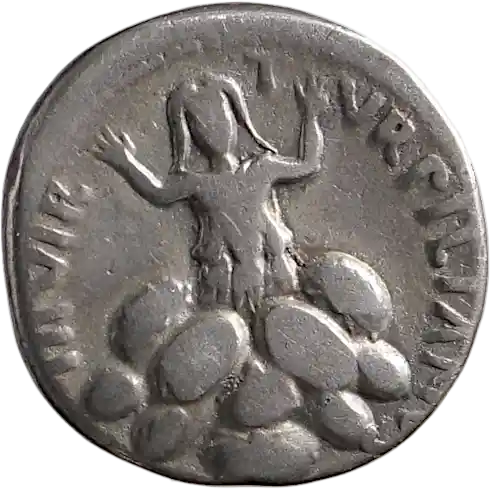
It is impossible to know the reasons for the escape, given that the battle was far from lost at the time. Nor do we know whether the escape had been pre-planned. Nonetheless, it appears as though the move was a fatal miscalculation. Although Antony and Cleopatra were able to make a return to Alexandria, they were pursued by Octavian’s forces and, ultimately, both Antony and Cleopatra would commit suicide in August 30 BCE. Octavian would have Cleopatra’s son, Cesarion, executed, before annexing Egypt as a new Roman province in the same year.
And with that, only one man remained in the struggle for total authority. The republic had died and a new era was born - the Empire.
Octavian was hardly the saviour of the republic as he claimed to be, but the peace that he eventually brought to Rome was undoubtedly good for the populace. Whether more of a ruthless power monger or unparalleled visionary, the rise of Octavian has long been a subject of debate. But no-one can deny that, by autumn of 30 BCE, he and his allies were the sole inheritors of the republic; they were free to mould a new regime.
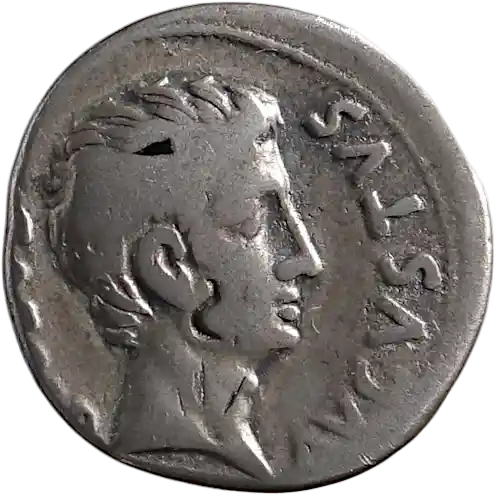
In January of 27 BCE, Octavian returned his wartime powers to the senate and the people of Rome. In return, the senate granted Octavian the honorific title, Augustus. There had been some deliberation over which name Octavian should take, with a contender being ‘Romulus’ after the legendary founder of Rome. However, Romulus had an unfortunate link to fratricide, which presented a risk Octavian was not prepared to take, especially given that he had just fought multiple wars against fellow citizens. Despite what hindsight may lead you to believe, these were still uncertain times and, in the end, he chose a more neutral name: ‘Augustus’, meaning ‘the revered one’.
With this mutual acknowledgement of powers between the senate and its new Princeps (First Citizen), the principate and Pax Romana had been established, thus marking the beginning of a new era of relative peace and stability under Imperial Rome.
Naturally, Augustus could not call himself a king - he had learned that much from Caesar. The total dominance of one man had been an image greatly feared in the Republic; to be so bullish at such a delicate time was near-suicidal for both him and the new system he was presiding over. Augustus’ talent lay in his cold calculation and subtle garnering of power.
Nonetheless, gazing over his new lands and new subjects, one could not blame Augustus for truly believing that he shared everything with that of a king, except in name.