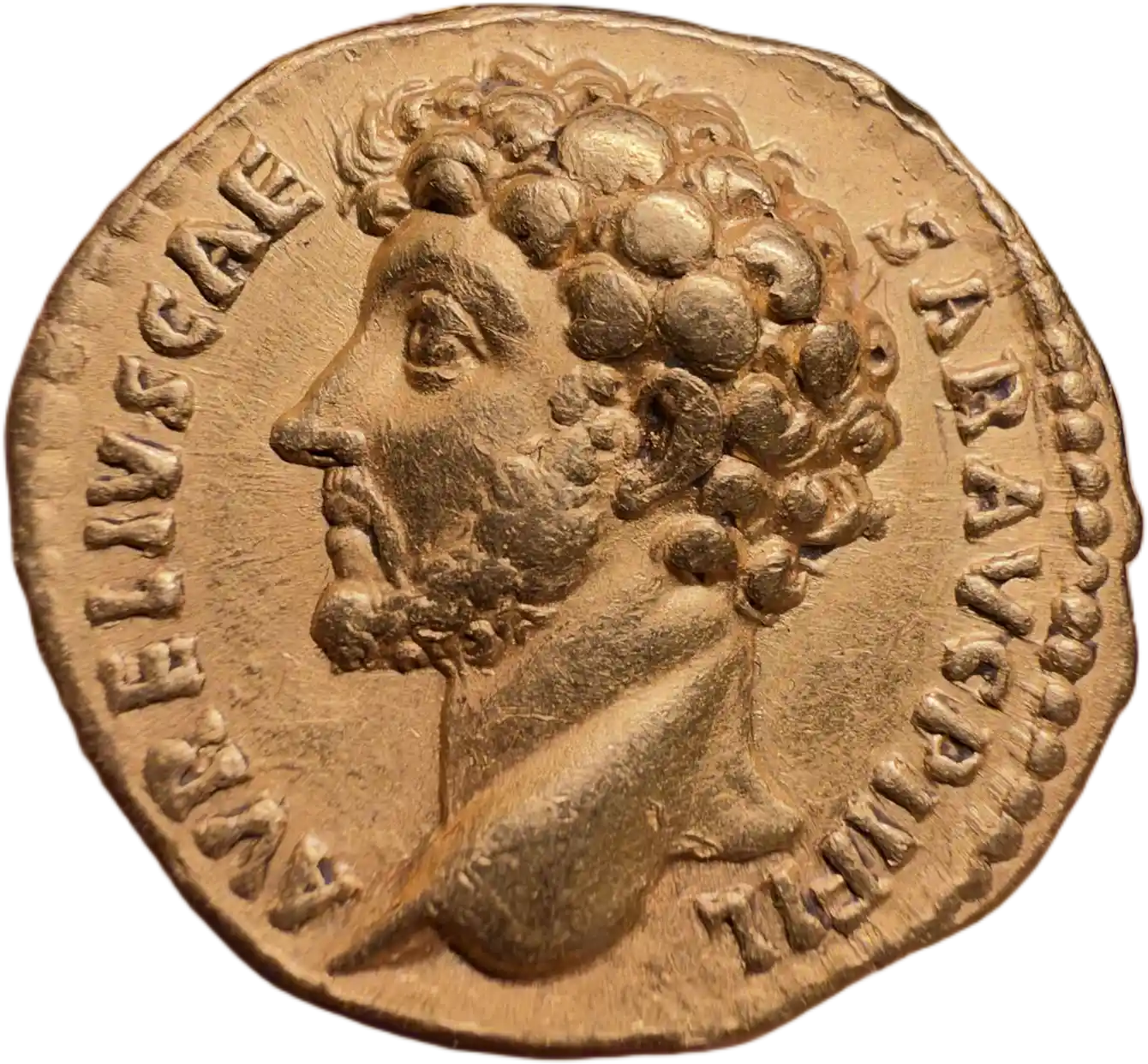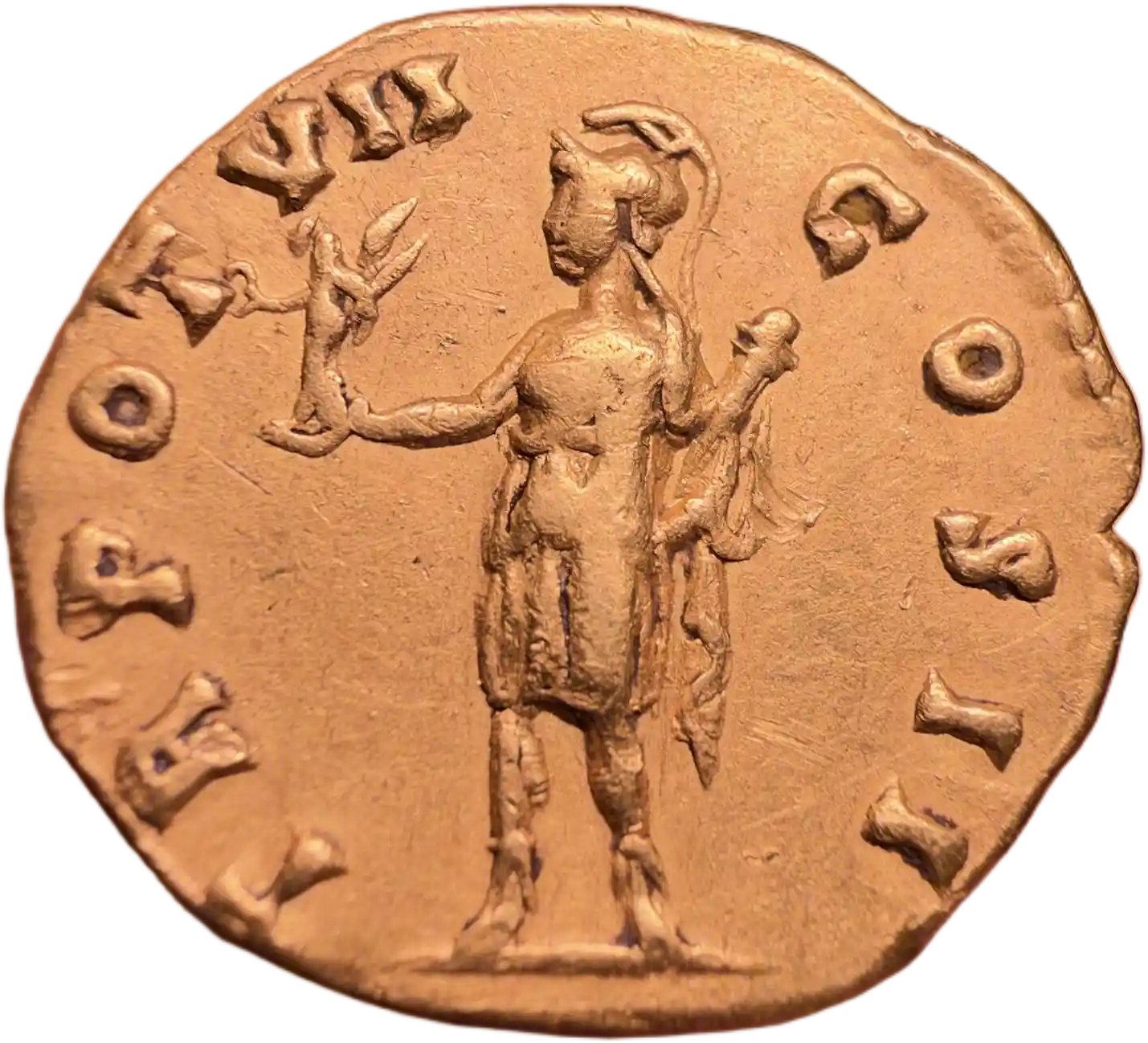
Unpublished Marcus Aurelius Aureus Die Mule
A quick study showing a unique combination between RIC 452D and 457B into a Mule Aureus.
Die Study / Investigation
Studying a Unpublished die mule of Marcus Aurelius
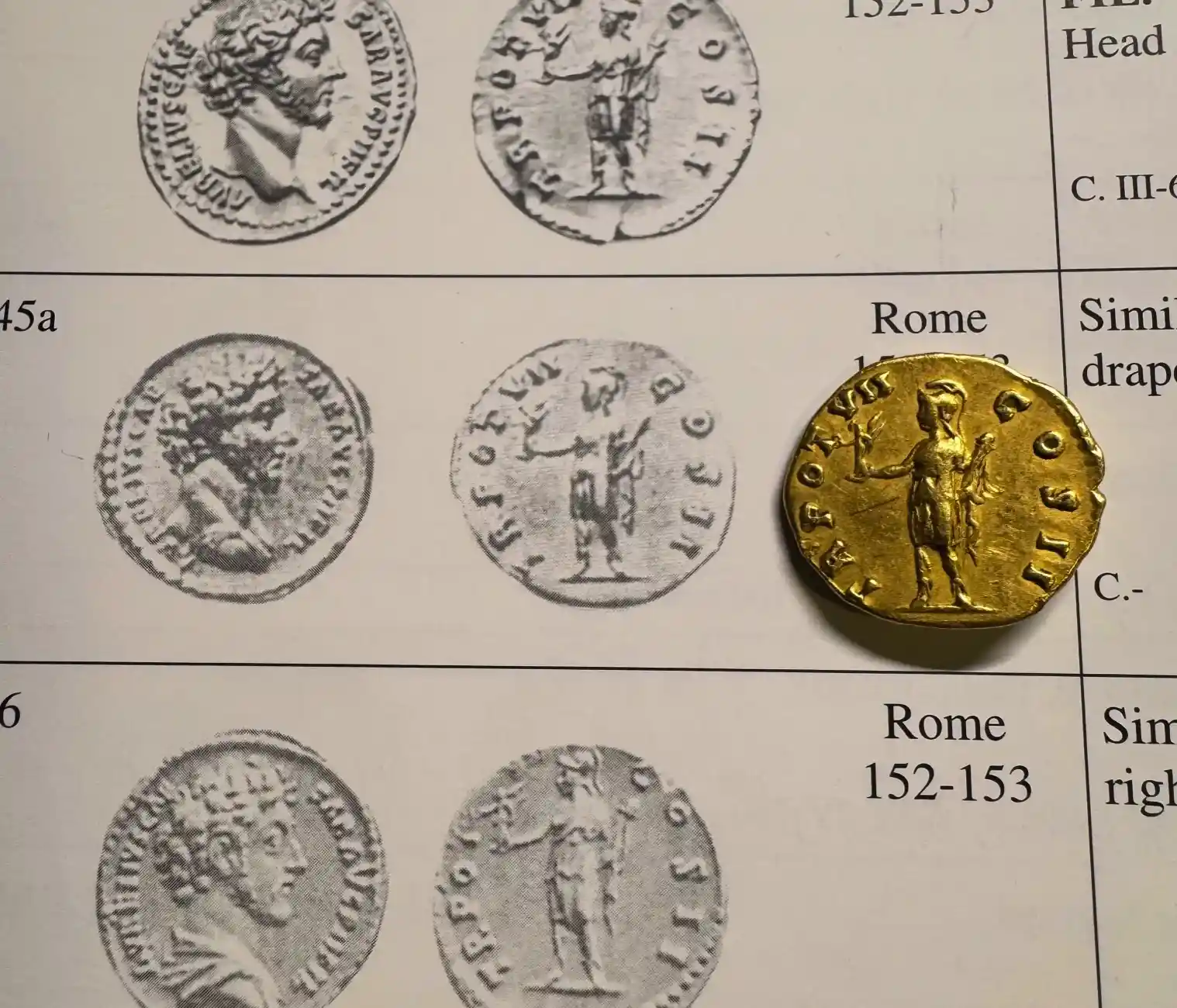
All coins referenced in this article are Marcus Aurelius as Caesar, and are therefore technically minted under the Authority of Antoninus Pius, with Marcus as the junior. The two types of importance to this discussion are 452D and 457B (chronologically ordered). Differences bolded
What is a Die Mule?
When 2 dies (obverse & reverse) which are distinctly made to be paired with other reverse & obverse respectively, and used together.
Longer Answer on What is a Die Mule
A mule is an official mint issue Roman coin that is a hybrid, meaning it has the obverse and reverse type that do not belong together. Frequently hybrids will have am obverse of one emperor and the reverse of another. The numismatic term mule is derived from the animal mule, the hybrid offspring of a horse and a donkey, due to such a coin having two sides intended for different coins, much as a mule has parents of two different species. Coins of this type are generally scarce or rare. A modern day comparison would be the obverse (heads) of a US Penny and the reverse (tails) of a US Dime. Unofficial, ancient counterfeit or imitative, hybrids are very common and should not be described as mules. Curtis Clay explained on the Classical Numismatic Discussion Board:
"The term "hybrid" has become tainted in my mind, because so many of the coins so described in the earlier RIC volumes and in Roman Silver Coins are nothing but ancient counterfeits. Therefore I prefer to say "mule" for coins struck at the mint from mismatched official dies. The distinction official/unofficial is crucial. Official mules are for the most part very rare, and interesting as error coins and for showing a chronological connection between dies that we otherwise wouldn't have known were in use at the same time. Unofficial hybrids are very common and teach us nothing about the chronology of the official coinage."
Official mules are related to either contemporaneous or consecutive issues. For a contemporaneous issue mule error, a reverse die is used for the wrong emperor in an issue that struck coins for both rulers. For example. an obverse of Septimius Severus, combined with a reverse type of Caracalla from the same issue. For a consecutive issue mule error, hybrids join one die showing a new, recently introduced type or legend, with a die of the preceding issue that had erroneously or carelessly remained in use, showing a now superseded type or legend. For example a denarius of Caracalla with TR P II on the reverse, coupled with an obverse die of the preceding issue, still showing just TR P. Consecutive issue mule errors also include coins from the first issue of an emperor, struck with a reverse die from the last issue of the previous emperor.
- source on ForumAncientCoins wiki
Die Mules in general are rare as they are mistakes of the mint. They appear to be even rarer for gold Aureii (aureus), which would have been the denomination with the highest quality control in the imperial mints. From some investigation, I have noted 5 examples in auction histories which are either unconfirmed or confirmed die mules across 300~ years of minting aureus (1st century bc -> 4th century ad) that survive to our day to be captured in auction histories. Arguably, due to their scarcity and value, Aureus are more likely to be well researched, sold in serious auctions, and have their mules be documented than say, denarii or double denarii. Even with these assumptions, these are the only 5 aureus mules I could find.
1. Unconfirmed Die Mule, Septimius Severus Aureus (202 ad)
2. Confirmed Die Mule, Septimius Severus Aureus (210 ad)
3. Has its own RIC, but technically a mule, Caracalla Aureus (210 ad)
4. Unconfirmed Possible Die Mule, Titus As Caesar Aureus (77 ad)
5. Confirmed Die Mule, Domitian as Augustus Aureus (88 ad)
Background on this Articles Mule
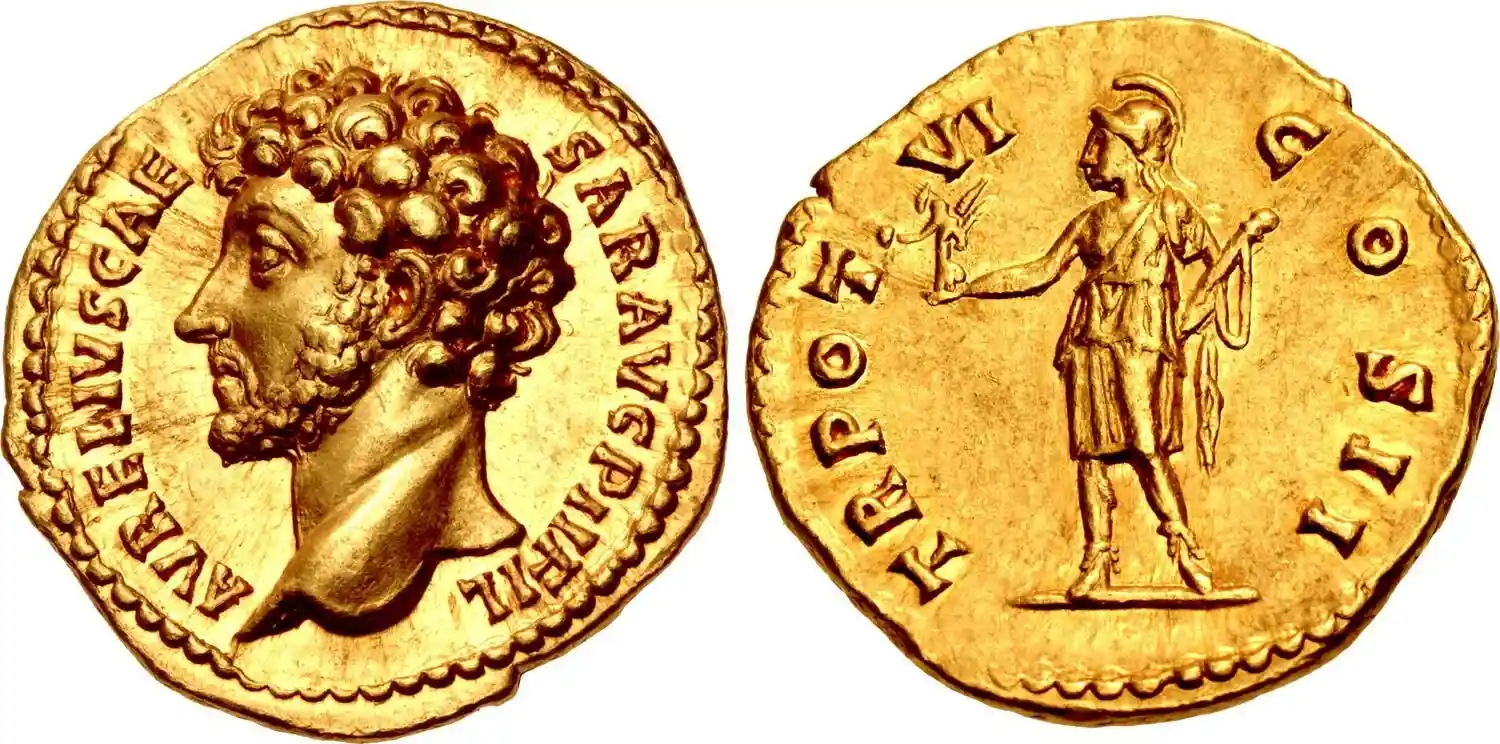
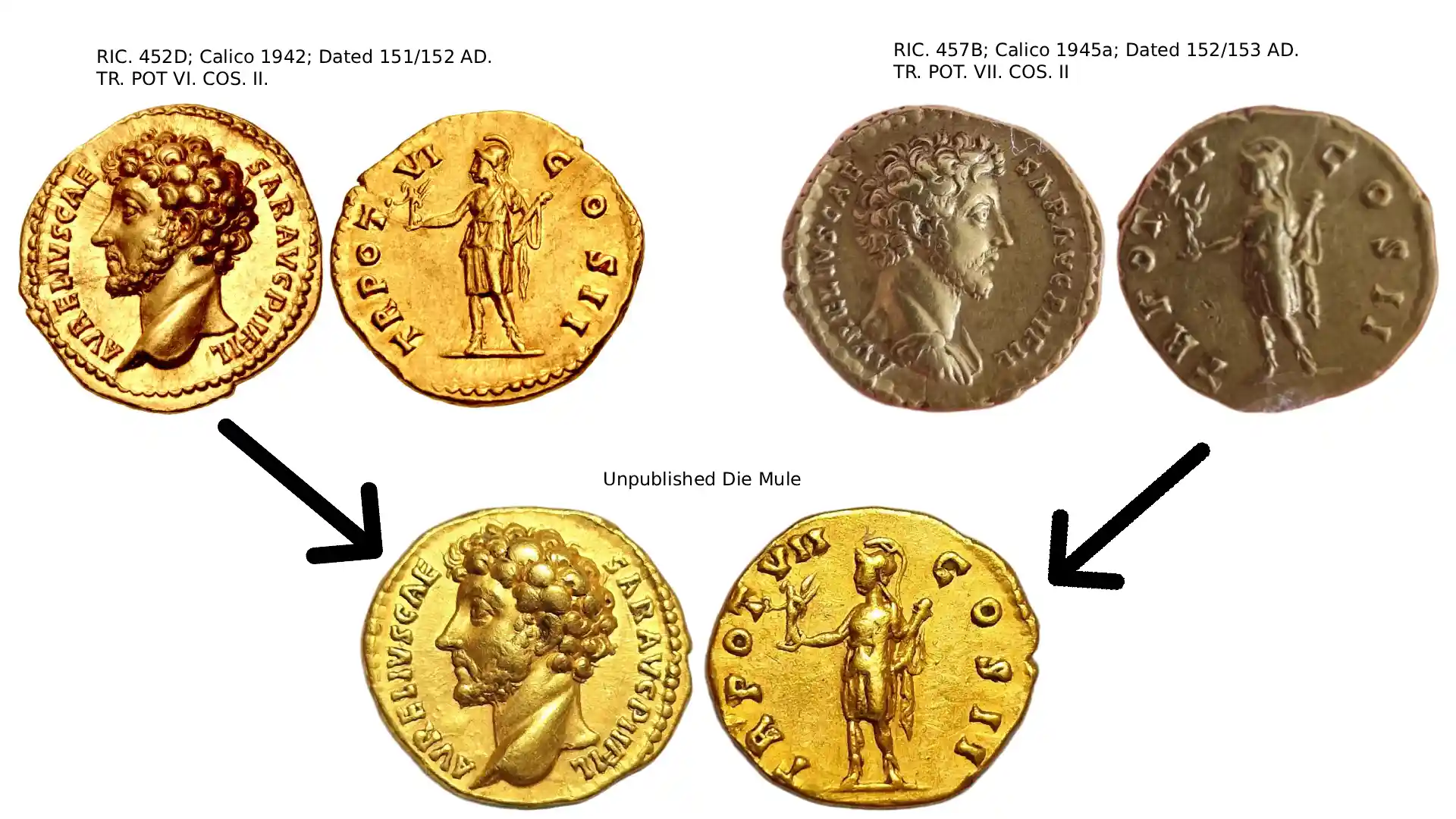
An official Mule requires that known types dies are used for confirmation that it's a mule. The two types being discussed are 452D and 457B. There are some subtle differences between them. First, they are from different years 151-152 vs 152-153 dated via the COS/TR POT numbers. And the Portrait which is Left, with no cuirassed vs, Right with cuirassed.
Die A: RIC III Antoninus Pius 452D (151-152 AD)
Legend: AVRELIVS CAESAR AVG PII FIL
Type: Head of Marcus Aurelius, bare, left
Legend: TR POT VI COS II
Type: Roma (or Virtus), helmeted, standing left, holding Victory in right hand and parazonium in left
Example here: Note left, not draped, cuirassed & VI
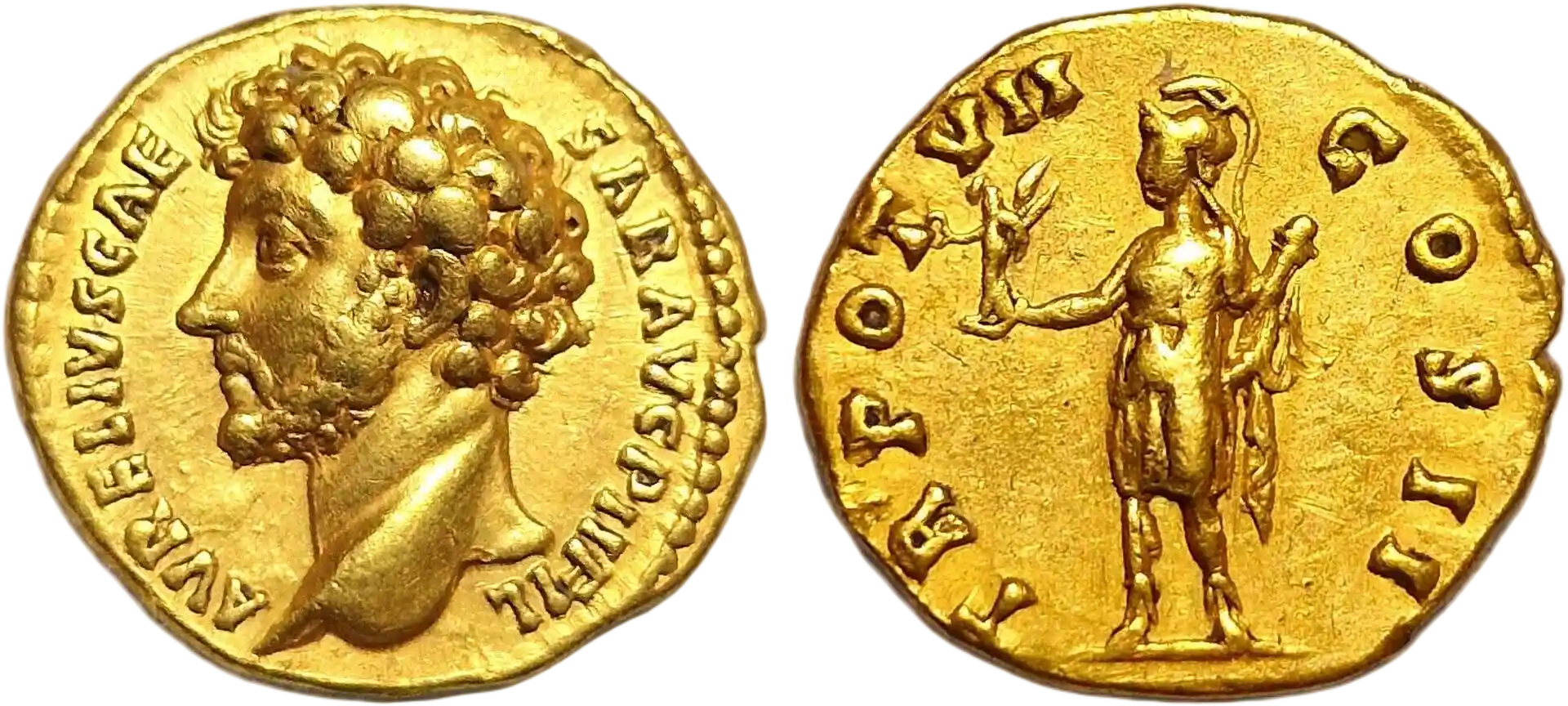
Die B: RIC III Antoninus Pius 457B (152-153 AD)
Obverse
Legend: AVRELIVS CAESAR AVG PII FIL
Type: Bust of Marcus Aurelius, bare-headed, draped, cuirassed, right
Reverse
Legend: TR POT VII COS II
Type: Roma, helmeted, in military dress, standing left, holding Victory on extended right hand and parazonium in left
Example here: Note draped, cuirassed, right & VII
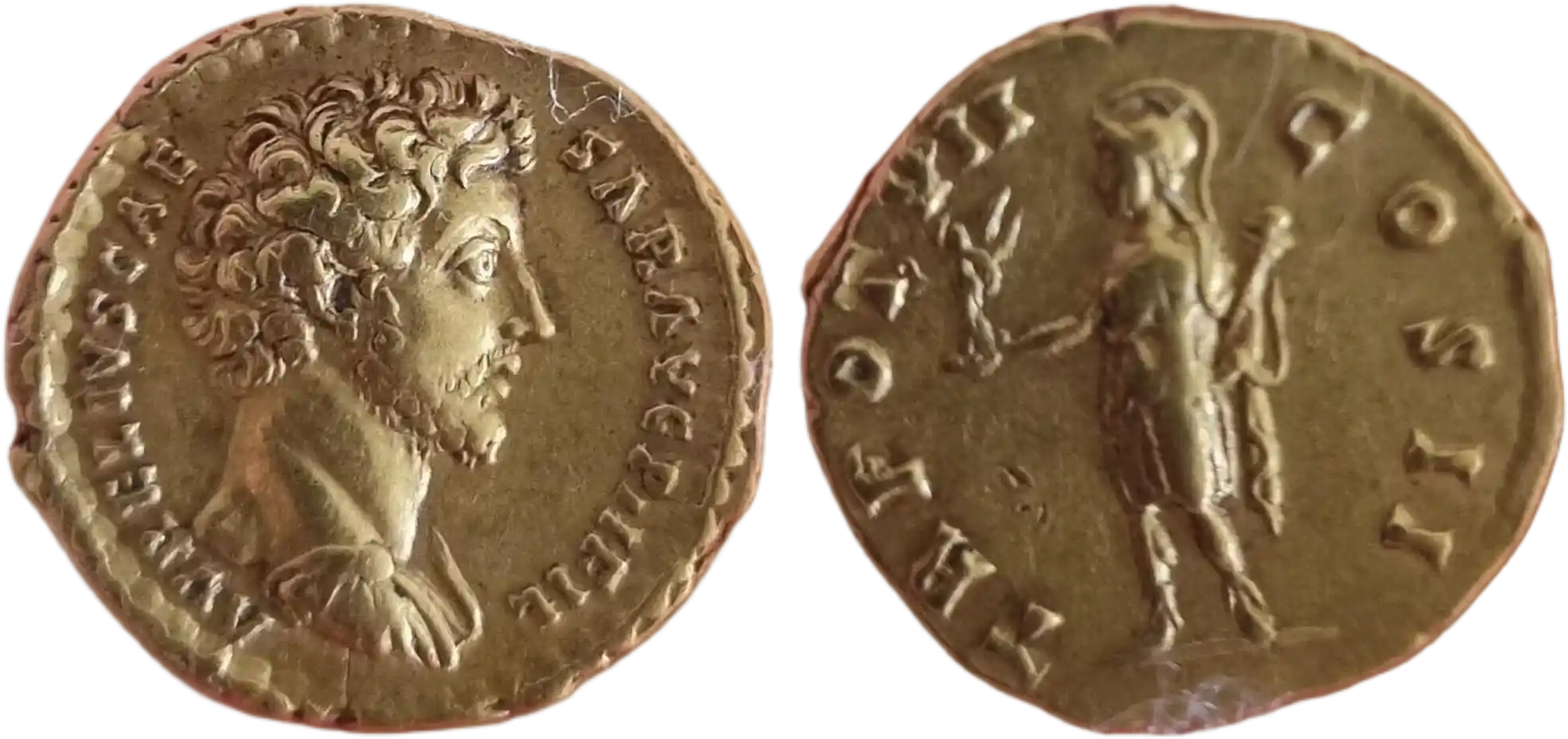
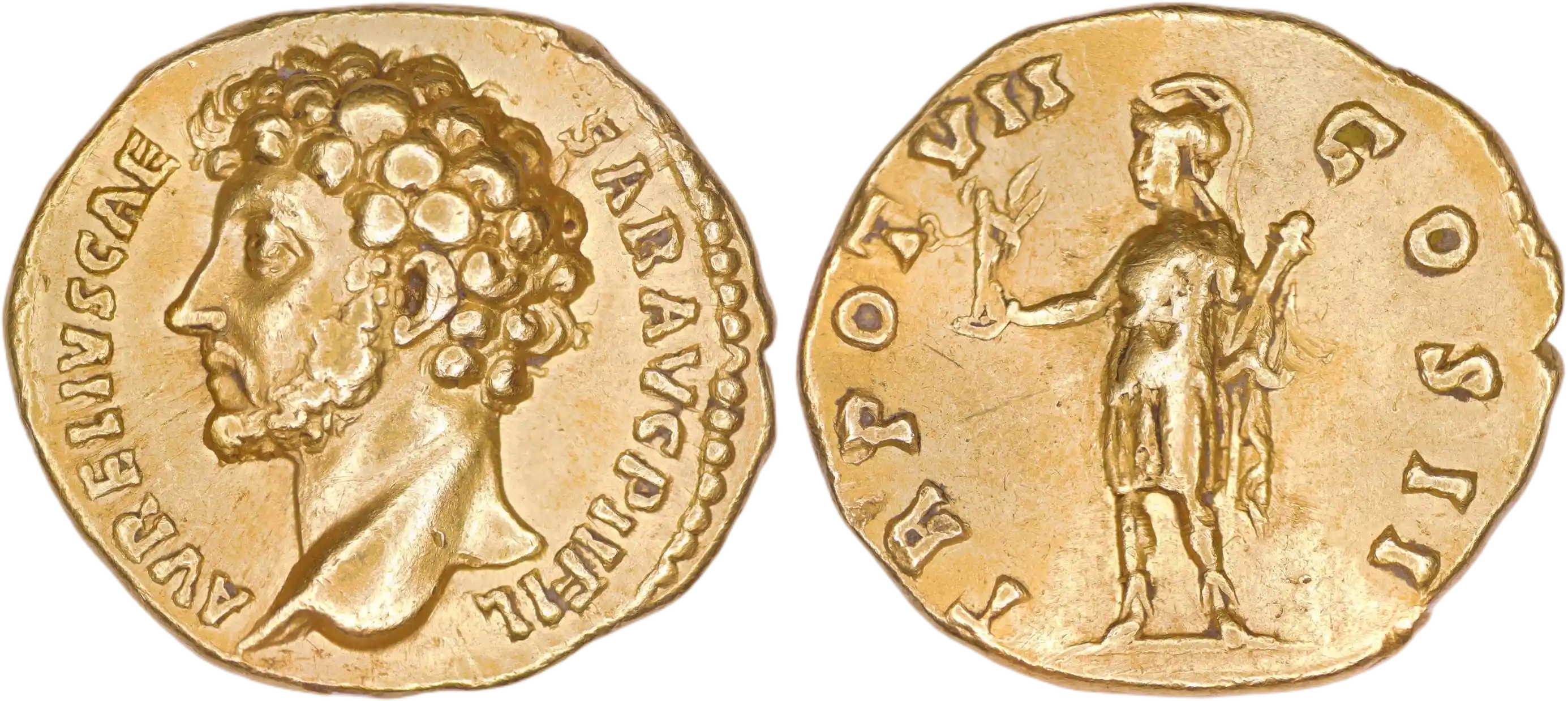
However, a new combination of these Obverse and Reverses surfaced first in the Netherlands at an auction in January 2025, then at L5 Auction 1 where I purchased it. At first it may appear to be a "Not in RIC" type, however with some die matching you can see this is in fact a combination of existing dies into a one of a kind (currently) Aureus. By actually die matching both the obverse and reverse to other types, we can have a 'confirmed' die mule, rather than an hypothetical/unconfirmed one.
As you can see in this coin We have a un-cuirassed left facing portrait with a reverse containing TR/POT/VII, not the correct TR/POT/VI for this issue.
As you can see in this diagram, this coin die matches 2 existing coins proving this hypothesis.
Here is the coin on my NumisVault public profile.